Tuesday, May 21, 2013

A Baker's Dozen of Reviews: Day Three Once Upon a Tower


Once Upon a Tower
By Eloisa James
Publisher: Avon
Release Date: May 28, 2013

Gowan Stoughton, Duke of Kinross, Chief of Clan MacAulay, is a man who knows the value of time. He might prefer to be in the Highlands fishing for salmon to being in an English ballroom fishing for a wife, but since he needs information from the Earl of Gilchrist, it seems prudent to combine the two tasks. But Gowan is the one who is hooked at first sight by Gilchrist’s beautiful daughter. He told himself that diligence was the chief criterion for his duchess, but it is not a quality he considers at all in choosing Lady Edith Gilchrist for his bride.

Instead, from the moment he sees her, Gowan thinks of Edie in the language of fairy tales. She is “otherworldly.” She looks as if she were “dreaming of her home under a fairy hill.” Her hair “gleamed like the golden apples of the sun.” Gowan, who professes to value the utilitarian, suddenly discovers that Shakespeare has his uses since the bard gives Gowan the words to express his inexpressible feelings for the glorious Edie: “I never saw true beauty till this night.”
(Romeo and Juliet, Act 1, Scene 5).

The reader soon discovers that Edie’s silence and serenity, qualities that greatly appeal to Gowan, as well as her “burning touch” are attributable to her feverishness. Edie is much less ethereal and much more unconventional than Gowan knows. He doesn’t even know that music is the most important thing to her. Edie is a gifted cellist, good enough to have been a performer had she been born male. From the first letter he receives from her, Gowan learns that his first impression of Edie was an incomplete picture. It will take marriage to teach him how incomplete.

Since she was so ill when they met, Edie knows even less about Gowan than he knows about her. She’s not even certain what the man she has promised to marry looks like. Her strongest memory is of his “enchanting Scottish burr.” Combining her own vague recollection of him with what her stepmother tells her, Edie concludes that she is about to become the wife of “a Scotsman the size of a bloody tree with no sense of humor and an impulsive bent.”  

The letters Edie and Gowan exchange do reveal something of who they are, but they are still essentially strangers when they marry. They are also quite young: she is nineteen and he is twenty-one. They are also both single-minded in their obsessions, as the young are prone to be, and neither really understands what drives the other. Nor have they learned the necessity of compromise.

Gowan learns that Edie’s practice time with her cello is important to her, but he does not understand that music determines how Edie thinks, how she views the external world. He says to her at one point, “You may be a musician, but that is not the sum of you.” And Edie’s response is to think he is wrong, that music is the sum of her. It isn’t all of who she is, of course, but it does color everything about her. This is particularly true because for all of her life, music has been both her single passion and her sole means of real connection with her only parent.

Gowan is as consumed by his responsibilities as duke and chief of his clan as Edie is by her music. Edie subconsciously understands this, as one intuitive response reveals: “Hundreds of years of self-assurance had been drilled into him with the same rigor as had her musical scales.
Earlier she recognizes that Gowan is “as driven as she. . . Though she wasn’t entirely sure in what direction.” What she can’t know is that for Gowan, as for Edie, the importance of this role is magnified by what his father was.

The potential for problems is there from the beginning, and then the problems with their sex life complicate the situation even more. Edie and Gowan are not merely sexually inexperienced; they are true innocents. Edie barely understands what the word “prick” means. She doesn’t even know how to flirt. She is dependent upon what her stepmother tells her, and some of Layla’s advice is very bad indeed. Gowan was betrothed to his first fiancée when he was very young, and the licentiousness of his parents has made him adopt high standards for his own behavior. He was too honorable to be faithless, believing that lying with another woman when his troth was  pledged would dishonor both his fiancée and himself. He found the idea of paying for sex “distasteful.” Gowan knows more about sex than Edie does, but his knowledge is based on certain illustrated volumes in his library. Their ignorance combined with their inability to communicate is disastrous.

The first seventeen chapters show Gowan and Edie meeting and moving toward marriage. The next twenty-five show their marriage moving toward trouble, deeply in trouble, and achieving their HEA. Eloisa James is at her finest when she writes marriage-in trouble stories, and Once Upon a Tower is no exception.

I spent a great deal of time trying to get all the reasons I love this book into coherent paragraphs. I couldn’t do it. My enthusiasm just kept overpowering my rational thought process. So instead of reasoned criticism, I give you a list:

The Top Ten Reasons I Loved Once Upon a Tower
(in addition to Gowan and Edie, of course)

10. Literary Allusions
One of the things I always look forward to in an Eloisa James novel is the literary allusions. I have fun trying to identify those she sneaks in, but even when they come with full identification, I enjoy them. The Romeo and Juliet references were a joy in this one, but an even greater delight was the use of John Donne’s aubade, a poem I love for many reasons.

9. Smythe-Smith
What fun to have Edie and Gowan attending the wedding of Honoria Smyth-Smith to the Earl of Chatteris! I love the idea that they are all part of one world. I might say it’s “Just like Heaven.”

8. Letters
I loved the letters! I thought they were funny, and I thought they served a significant purpose  in allowing Gowan and Edie to learn a little more about one another before their second meeting.

7. Bardolph
Since Bardolph’s name comes from Shakespeare’s Henry IV, Part I and Henry V, I might have included him with the literary allusions, but another of my particular joys in reading Eloisa James is decoding the names she gives tertiary characters. My favorite is Prufrock, Piers’s butler in When Beauty Tamed the Beast, but Bardolph is a close second. He’s a terrific character, much worthier than the character whose name he bears.

6. Layla
First, Layla with her cheroots, her empty flirtations, her unhappy marriage, and her loving heart is a vibrant character , one who is easy to like. But I also thought her name fit perfectly into the novel, evoking both the character from Arabic literature whose love story has some similarities to Romeo and Juliet and Eric Clapton’s song by that title (based on the literary character). I thought a couple of Clapton’s lines fit EJ’s Layla well: “You've been running and hiding much too long. / You know it's just your foolish pride.”

5. The Dress
I can’t say too much about this without moving into spoiler territory, but readers will understand the importance of The Dress, the one that makes you look the way you want to look, the one that affects him exactly the way you want it too. Edie wears such a dress. It is “China rose. . . . Darker than cinnabar, more saturated than claret . . . well, close to claret.”  It is amazing, and it leads to a Moment. The only other thing I’m going to say is that nobody can make a kiss on the hand as sexy as Eloisa James does.

 4. The Tower
Part of the fun of reading James’s fairy tale romances is considering how she uses elements of the traditional story, sometimes staying true to them in order to suggest the original and sometimes giving one a twist to make it reflect a quite different meaning. Edie is beautiful like Rapunzel. In fact Gowan’s comparison of her hair to the “golden apples of the sun” echoes the description from the Grimm Brothers’ tale (1812) that calls her “the most beautiful child under the sun.”  Rapunzel is musical as well. It is her voice that first enchants the king’s son. Edie is a cellist rather than a singer, but her playing enchants Gowan the first time he hears her. Rapunzel and her prince marry, but they must overcome obstacles before they begin their HEA. Edie and Gowan’s story follows the same pattern. The prince wanders blind, weeping over the loss of his wife. Gowan’s blindness is metaphoric, but he too wanders and weeps for the same cause.  And in both stories, the wife’s tears are healing.


The twist comes with the tower. Rapunzel is shut into a tower that “had neither stairs nor door, but quite at the top was a little window.” The tower sounds similar to Edie’s, but Edie chooses to shut herself into her tower rather than being imprisoned there by an enchantress.  Readers with a Freudian leaning may see the tower as a phallic symbol. I was more interested in seeing Edie’s making choices and taking action as evidence of her maturing and recognizing her autonomy, qualities that link Edie more closely to Charlotte Rose de Caumont de la Force’s version of the tale, "Persinette"  (1697).

3. The Groveling
Sometimes my affection for a book is shadowed by the hero’s insufficient groveling for what I see as serious offenses. EJ’s Potent Pleasures is one of those books. But Gowan grovels beautifully. Additionally, other characters—several of them-- say to Gowan all the things I wanted to shout at him. Wonderful!

2. The Language
The language of Eloisa James’s novels is an abiding joy. There are the lovely, lyrical lines that sing softly in the reader’s ear. I pick out one sentence in every EJ novel that particularly satisfies my love of the lyrical line. My pick for OUAT: “Her lips held a natural curve, as if she had a kiss or a smile in reserve, one that she had never given away.” 

Beyond the lyricism, there is a sense of rightness in every word. James gives the reader the feeling that each word is chosen with precision and purpose. For example, in one scene Layla claims that her husband doesn’t like her. Edie says to her, “I believe you do like each other. You just need to talk more.” The language here is simple; twelve of the thirteen words in the two sentences are monosyllabic.  But the rhythm is perfect for the situation, intensifying the directness and genuineness of Edie’s response. Her words are also touched with irony since the reader understands what Edie does not: her words will apply as well to Edie and Gowan.

      1. The Totally Satisfying HEA
No matter what else I love about a romance novel, it can never reach my top tier of favorites if the ending     fails to leave me believing that the love of the H/H is the kind that can survive all the blows life will deliver. The ending of OUAT leaves me with this feeling with no reservations. The romantic gesture is perfect, the luscious frosting on the very best cake.

I highly recommend this one. Imagine I’m sending up “Read This!” balloons to remind you that it’s available in one week.

Are you a fan of fairy tale romances? What qualities do your top tier favorites have in common?


Monday, May 20, 2013

A Baker's Dozen of Reviews: Day Two--Just One Kiss


Just One Kiss
By Susan Mallery
Publisher: Harlequin HQN
Release Date: May 28, 2013

Justice Garrett was Patience McGraw’s first love, but he disappeared from Fool’s Gold with no warning before the young teens ever shared a kiss. Patience grew up and married at eighteen a man who couldn’t accept the responsibilities of fatherhood and left her less than a year later. She and her ten-year-old daughter Lillie live with Patience’s mother Ava, who suffers from MS. Patience is an optimist who enjoys her life in Fool’s Gold, dreaming of the day she can open Brew-haha, a coffee shop and occasionally regretting the man shortage in her hometown. One day Justice walks back into her life as unexpectedly as he walked out.

Memories of Fool’s Gold and Patience have been bright spots in the bleak early life of Justice Garrett. He has never forgotten Patience, and the adult version is even better than his memories. The grown-up Patience has the same vitality and straightforwardness that characterized her fourteen-year-old self and a new beauty that makes Justice dangerously aware of her. He’s hoping that his move back to Fool’s Gold will give him something he’s never had—a normal life, but he is convinced that his past makes him unfit for Patience. Life with his career criminal father, the witness protection program to prevent the father he had testified against from killing him, and a career as a military sniper have immersed his very soul in darkness that he doesn’t want touching the sweetness of Patience and her family. Can he build the security training facility that he and his friends Ford Hendrix and Angel Whittaker are planning for Fool’s Gold and keep his relationship with Patience one of friendship when he wants so much more?

Justice’s effect on Patience is just as potent as it was in the past, but Patience is more wary now. Abandoned by both her father and her husband, she knows men are always leaving. Even Justice left her, and however good his reason, he has made no effort to get in touch with her during the intervening years, not even when he reconnected with Ford, their mutual friend. Patience has to protect not only her own heart but also that of her vulnerable daughter who clearly is not immune to Justice’s charm. But Patience thinks Justice owes her the kiss she never got all those years ago, and as both she and Justice are about to discover just one kiss will never be enough.

Just One Kiss is Susan Mallery’s sixteenth trip to Fool’s Gold, California (eleven novels and five novellas), so perhaps it is not surprising that the basic plot in this one—hero driven by demons from his past too noble to commit to the heroine, whose roots run deep in the small town and who has her own reasons for wariness—is a familiar one. But Mallery’s characters are so appealing that plot similarities are a minor quibble. Patience is a delight—warm, funny, loyal, and resolute, and Justice, whose blond, blue-eyed good looks are the antithesis of his inner darkness, is not only a hunk but also a man of courage and decency, capable of more tenderness and love than he realizes.

The secondary characters, especially Lillie and Ava, add depth and interest to the story. As always, part of the fun of reading a Fool’s Gold book is the appearance of various members of the community, those whose HEAs are in process and those whose stories are yet to come. If you are a regular visitor to Fool’s Gold, you will want to be certain to buy your ticket for this year’s trips. (You can purchase them in advance.) If you’ve never been to Fool’s Gold, I highly recommend it to readers who enjoy small towns with a distinctive history and dozens of fascinating people. I never miss an opportunity to visit.


One of the things I especially enjoy about Fool’s Gold and other favorite fictional small towns is the presence of all ages from infants to nonagenerians, but it does make for a large cast of characters. Do you like books with dozens of characters, or do you belong to the camp that believes the focus in romance fiction belongs solidly on the H/H?


Sunday, May 19, 2013

A Baker's Dozen of Reviews: Day One--The Sassy Belles


The Sassy Belle
By Beth Albright
Publisher: Harlequin Mira
Release Date: May 28, 2013

Blake O’Hara Heart and Vivi McFadden are BFFs, and have been since they were nine-year-olds in a Catholic school in Tuscaloosa, Alabama, so who else would Vivi turn to when Lewis Heart, Vivi’s latest lover and the Voice of the Crimson Tide, stops breathing during an intimate encounter at the Fountain Mist Motel. Both Blake and her husband Harry, brother to the breathless Lewis, are attorneys. Vivi is going to need two attorneys because by the time the police get to the Fountain Mist, the body has disappeared.

Things get more complicated by the minute when the homicide investigator in charge of the case turns out to be Sonny Bartholomew, Blake’s old boyfriend. The murder case may have turned into a missing person case, but Vivi is still a person of interest. Blake and Harry spend the tenth anniversary of a marriage that may be in its death throes in the bar of the historic Tutwiler Hotel, the scene of Harry ‘s proposal, listening to the man Blake might have married ask her best friend questions about  Vivi’s sex life with the missing brother  to whom Harry hasn’t spoken in six years. This may be a scandal big enough to torpedo Harry’s chances of becoming the next senator from Alabama. 

The case seems to be stirring up more questions than answers, and half of Tuscaloosa, including Blake’s former stepsister and forever bête noire, seems to be bent on inserting themselves into the mystery. Meanwhile, Blake’s personal life is also growing more complicated as the distance between her and increases and her feelings for Sonny grow more intense. Some things are broken beyond repair, some things are fixed, and answers come from unexpected sources, but through it all three generations of Sassy Belles, “Southern Belles with attitude and a splash of fun,” emerge triumphant.

Beth Albright’s debut novel blends elements of romance, mystery, and chick lit into a frothy mix that is as Southern as grits and barbecue and as appealing as a glass of cold sweet tea on an August afternoon. Albright overgeneralizes Southern experience, but the result is a cast of amusing characters.  The Sassy Belles was such fun to read that even a reader with ties to Georgia and Auburn could enjoy a few hours in Tide Country.

The setting for this book is a real place, clearly one that the author knows well. Do you prefer your settings real or fictional?


Saturday, May 18, 2013

RITA Season: Part 1 (Single-Title Contemporary)


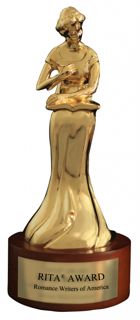
In March calls went out informing seventy-five authors that their books had been named finalists for the 2013 RITAs, romance fiction’s most prestigious awards. Winners in eleven categories will be announced July 20 at the 33rd annual conference of the Romance Writers of America. I know some romance readers—even some romance writers—pay little attention to these awards. And while I’m certainly no expert on the selection process, I know enough to know that the oft-repeated comparison to the Oscars is misleading since there is no RWA equivalent of voting within branches (writers for writers, actors for actors, film editors for film editors, etc.) by which the Academy of Motion Pictures Arts and Sciences selects finalists or for all active members to vote for the winners. If I understand the RITA process correctly, finalists and winners are determined by small panels of judges. While I’m sure the judges make every effort to be fair and objective, I’m skeptical enough to think personal tastes and histories are bound to be a factor.

Now I don’t mean to rain on anybody’s parade. I’m an awards junkie, and since I spend considerably more time reading and writing about romance fiction than I do watching movies or television or listening to the kind of music that is the focus of most of the music award shows, the RITAs are the awards I’m most interested in. Whatever the process, they are the industry awards with the greatest cachet. I cheer wildly when favorite books and authors are recognized, regret the shortsightedness or questionable taste that ignored some deserving recognition, and check out unfamiliar finalists that I might find rewarding.


The posts that I’ll be sharing on alternate Saturdays between now and July 6 will be self-indulgent, romance-fan posts.  I’m going to be looking only at the categories in which I have read most of the finalists and talking about the books I have read with a nostalgic glance at some favorite winners from the past and a few gripes about treasured books not included among the current finalists. I hope you’ll join me and share your own totally authentic, equally subjective views.

Contemporary Single Title Romance: The Past


Checking past winners of the RITA for Best Contemporary Single Title Romance, I was surprised to see how many writers have won more than once. Nora Roberts predictably is on the list of multiple winners. One of her triple Hall of Fame positions is due to her winning the Rita in this category for Public Secrets (1991), Private Scandals (1994), and Born in Ice (1996). Another Hall of Famer, Susan Elizabeth Phillips, practically owned the award for a while, winning for Nobody's Baby But Mine (1998), Dream A Little Dream, and First Lady (2001). More recently, Rachel Gibson (True Confessions, 2002; Not Another Bad Date, 2009) and Kristan Higgins (Catch of the Day, 2008; Too Good to Be True, 2010) have each won twice. One of this year’s finalists, Barbara Freethy, won in this category with her debut book, Daniel’s Gift, in 1997. It’s still my favorite Freethy. I’ve read all those listed above, some of them several times.


If I could grant a personal Worth Reading and Rereading in Any Year award to the three RITA winners in this category, I’d present my award to Again (1995) by Kathleen Gilles Seidel, No Place Like Home (2003) by Barbara Samuel and Bet Me (2005) by Jennifer Crusie.

  • Seidel is an author I sorely miss. Till the Stars Fall, astoundingly not a RITA winner, is one of my most reread books, but I love Again almost as much. Since the heroine is a Georgette Heyer-loving chief writer for a soap opera set in Regency London and the hero plays a duke in said soap opera, reading Again is almost like getting a contemporary and a historical in one book. Seidel proves that romance can be intelligent, funny, and sigh-worthy at the same time. Will somebody please digitalize Seidel’s books? My copies are falling to bits, and I’d pay trade pb prices to have them on my Kindle.
  • I’d read a McDonald’s ad if Barbara Samuel wrote the copy, and No Place Like Home is one of my most beloved reads ever. Even though it is classified as contemporary romance, it is a good fit with the women’s fiction titles this Hall of Fame author has written as Barbara Samuel and as Barbara O’Neal. This powerful, emotional first-person tale features a heroine who ran away with a musician and returns more than two decades later, still estranged from her father, with a seventeen-year-old-son and a gay best friend dying of AIDS. Her hero, a wanderer named Malachi, is the brother of the best friend.
  • Back when the Eloisa James/Julia Quinn bulletin board was alive and several thousand strong, we ran a poll for the romance of the decade, a book that set a standard by which others would be judged. Crusie’s Bet Me was the undisputed winner. With a zaftig heroine, a hero who gives her Krispy Kremes and loves her as she is, and a cat named Elvis, this one is funny, sweet (unexpectedly so for a Crusie), smart, and irresistible—within a hair’s breadth of perfect IMO.
Contemporary Single Title Romance: The Present


This is one of the categories in which I have usually read most of the finalists. This year I’ve read six of the eight. One thing that most of my favorite contemporary authors have in common is their ability to create characters who are imperfect, in process, and at home in the 21st century. For me, it’s particularly important that these qualities hold true for the heroine, and the heroines in these six finalists satisfied on all counts.


  • About Last Night by Ruthie Knox: I love that Cath enjoyed her work at the Victoria and Albert Museum, that she speculates about other passengers on the tube, and that she is determined to become a new Cath because she made some bad choices as the old Cath.
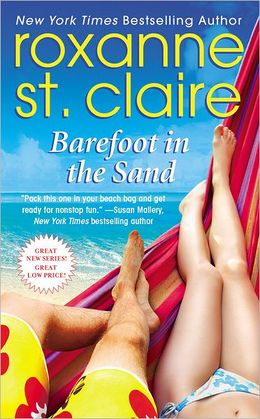
  • Barefoot in the Sand by Roxanne St. Claire: Lacey is a survivor. She survived a bad relationship, a hurricane that left her home in pieces, and life with a teenage daughter. She survives because of her own toughness and tenacity but also because she has great friends who show up when she needs them, who call her on the excuses she gives to avoid action, and who love her at her best and her worst.
  • Forever and a Day by Jill Shalvis; Lucky in Love by Jill Shalvis: Shalvis is terrific at creating heroines who, like most of the women I know from teenagers to octogenarians, are full of contradictions. Grace (Forever and a Day) is a bit of a ditz, but she’s also smart intellectually and emotionally.  Mallory (Lucky in Love) is a classic good girl who wants to let her inner bad girl loose. They are also funny. I like heroines who make me laugh, the kind of genuinely affectionate, I’m-glad-I-know-you laughter that my good friends inspire. Grace and Mallory evoke this kind of laughter.
  • Sugar Springs by Kim Law: I’m no fan of self-abnegating heroines, but experience has taught me that love sometimes requires sacrifices. I have a particular fondness for heroines who reshape their dreams to fit unexpected choices they were forced to make. Lee Ann is this kind of heroine, and it’s all the sweeter when, against huge odds, she gets her HEA.
  • The Way Back Home by Barbara Freethy: Emotions can be messy, and where grief is concerned, they can also be ugly. Women in fiction and in life are sometimes denied free expression of such feelings. Freethy allows Alicia to be angry and even cruel as she struggles with her brother’s death five days before he was due to end his enlistment in the Marine Corps. Toxins have to be released before healing can occur. Alicia’s actions ring true to me.

Melt into You by Roni Loren and Zoe’s Muster by Barbara Hannay are also finalists in this category. I haven’t read these books. I checked them out. Melt into You sounds too edgy to be in my comfort zone, but I plan to read Zoe’s Muster if I can find it at the library or if it turns up as a Daily Deal.


Contemporary Single Title Romance: The Missing


Surely I’m not the only romance reader who reads the list of nominated books for any of the big awards and thinks well, that’s great, but what about X. It should be on the list. We can’t know why all our favorites don’t become RITA finalists. Perhaps some of them were not even entered by their authors or publishers. Here are seven (in alphabetical order by author) that I consider contenders for the Best Single-Title Contemporary Romance of 2012:


  • Somebody to Love, Kristan Higgins: Parker’s back but she lost her money and gained a hero, the last one she expected to fill the role. This book is genuinely funny in KH’s signature style and an interesting what-if.
  • About That Night, Julie James: Smart, funny, sexy, and contemporary in the best sense of all that word means, this novel offers a heroine you feel like you know and a hero you can’t forget.
  • Rainshadow Road, Lisa Kleypas: Sibling rivalry, a couple who actually communicate, and wonderful touches of magical realism make this one of Kleypas’s best and riskiest books. I loved it!
  • All Summer Long, Susan Mallery: This is my favorite in this long-running series (and I’ve read every one). Clay and Charlie are richly drawn with layers of complexity and likeability. And the gender reversal is spot on.
  • When Snow Falls, Brenda Novak: A heroine and hero neither of whom is powerful and wealthy or even middle-class make this a rare story indeed.
  • Can’t Buy Me Love, Molly O’Keefe: This is the debut single-title for this amazing writer who gives the reader deeply flawed characters who challenge each other, grow and change, and win the readers’ hearts.
  • Barefoot in the Rain, Roxanne St. Claire: A terrific story that has important, even profound things to say while still managing to be all a romance should be.


Now it’s your turn. How many of these finalists have you read? Do you have a favorite in the category? What missing contemporary titles would you have included?


Thursday, May 16, 2013

Bonus Review: The Biscuit Witch


The Biscuit Witch
A Crossroads Café novella, 
Book One of The MacBrides
By Deborah Smith
Publisher: 
Belle Bridge Books
Release Date: April 30, 2013

Tallulah Bankhead MacBride is on the run. Her daughter’s father, a New York celebrity chef, is determined to stop the rumors that he has never even seen his five-year-old daughter. Tal is equally determined to protect her child from the man who is “equal parts Bully, Braggart, and All-around Self-Centered jerk.” When an altercation involving cupcakes ends in a warrant for Tal’s arrest, she and her daughter take to the road. Tal needs a sanctuary, and since her sister in California is too far away, she heads toward the place she once called home, the mountains of North Carolina, northwest of Ashville, where her cousin Delta Whittlespoon owns the Crossroads Café.

Delta is away in New York, but the eccentric population of the community proves more than a match for the hired guns the jerky chef has sent after Tal. It turns out that the Crossroads Café needs Tal as much as she needs a safe place to hide. The biscuits Delta shipped from New York have been routed wrongly, and hungry hordes of tourists are scheduled to arrive expecting to be served the world-famous biscuits. Nobody can bake biscuits to match Delta’s--nobody except Tal who, like Delta herself, is a hereditary biscuit witch who can make biscuits by the secret recipe of their common ancestress, Mary Eve Nettie, the wild woman of Wild Woman Ridge. Perhaps Tal can find a place to belong.

The staunchest defender of Tal and her daughter Eve is another beneficiary of Delta’s benevolence and willingness to extend cousinhood to the most remote family connections. Douglas Firth, a whistle-blowing veterinarian from Scotland via Florida, is the third cousin twice removed of Delta’s husband, Sheriff Pike Whittlespoon. That connection is all Delta needs to offer Douglas a place to call home and a job as vet when he is cast out of wealthy racing circles. It takes scarcely more than a second look for the red-haired biscuit whisperer and five-year-old Eve to own the heart of this Scotsman. He opens his home and the ghost town where it is located to Tal and Eve. But Douglas and Tal have stories to share, secrets to unravel, and enemies to defeat before Tal can believe in a future that includes home, family, and a love bigger than her hungry dreams.

“The Biscuit Witch” is the first of a new, three-part novel from Deborah Smith, her first since A Gentle Rain (2007). Smith takes her readers back to the world of A Crossroads Café (2006), a place where the eccentric is ordinary and where outcasts, misfits, and other assorted lost souls find healing, wholeness, and home. The point of view alternates between Tal and Douglas, a technique that expands the reader’s experience.


I loved everything about “The Biscuit Witch”—its quirky characters, its humor of word and situation, the spirit of the large-hearted Delta that saturates the scenes even in her absence, a sense of place so strong that I felt the late November chill and smelled the baking biscuits, and the lyrical prose that touched my heart like an old song from a half-remembered dream. The touch of magical realism was an added delight. According to Flannery O’Connor, “The writer operates at a peculiar crossroads where time and place and eternity somehow meet.” Deborah Smith has found that crossroads, and she takes her reader there.


When I’m 103 and rocking on the porch of the local nursing home with the latest reading device filled with favorite romance novels and promising new ones in hand, I’ll still be wondering why Deborah Smith’s books aren’t on the bookshelves, print or digital, of every romance reader. Her characters, imperfect and past-haunted, are gloriously real and infinitely interesting. That description applies not only to Tal and Douglas but also to an impressive cast of secondary characters, including Tal’s sister, Gabby (Greta Garbo MacBride), the pickle queen, and her brother, Gus (Groucho Marx MacBride), the kitchen charmer, whose stories will be told in parts two and three. 

If you’ve never read Deborah Smith, “The Biscuit Witch” is a terrific introduction. The Crossroads Café, the novel in which Delta Whittlespoon first appears, is also a powerful and richly emotional tale. The digital version is on sale for $1.99 through the end of this month. I highly recommend both. And if you want more recommendations, A Place to Call Home is one of my all-time top ten favorite romances, and A Gentle Rain, Charming Grace, Sweet Hush, When Venus Fell, and On Bear Mountain all get five-star ratings from me.


Are there writers you love who deserve a much larger audience than the one they have? Who? 


Tuesday, May 14, 2013

Tuesday Review: Summer in Napa


Summer in Napa
By Marina Adair
Publisher: Montlake
Release Date: May 14, 2013

Alexis Moreau is back in St. Helena, California. Once the golden girl of her hometown, she is returning with a divorce decree so new the ink is barely dry and with her self-esteem in tatters. Her faithless ex was supposed to be her soul mate and forever love, but Lexi didn’t realize there was an expiration date on her high school romance that morphed into marriage. Now former husband Jeff is already someone else’s husband, and there is no room for Lexi in the New York restaurant she helped to make a success. She’s hoping that fulfilling an older dream of turning her grandmother’s patisserie into a bistro will give her new purpose. But first she has to cope with a string of unwanted dates her matchmaking grandmother arranges and the ambivalent feelings Marco DeLuca, he ex-husband’s best friend and perennial best man is evoking.

Marco DeLuca has always known that Lexi Moreau was off-limits for him, no matter how much she appealed to his libido and to his heart. He needs to focus on getting the old hotel he is transforming ready for the Summer Wine Showdown. Besides, even though technically Lexi is free now, Marco knows that getting involved with her would violate the man rules of romance. Or so he keeps telling himself. But although his head knows he should ignore Lexi, the rest of him is not getting the message.


When the two agree to fake a summer romance, it soon becomes clear that intentions are just tinder for the sparks that fly when this combustible twosome is together. Summer and wine and chocolate and a hero and heroine who finally have a chance to rectify the bad choices their hearts made earlier—it sounds like a perfect recipe for romance to me.


I finished Kissing Under the Mistletoe, Adair’s first book in her St. Helena’s Vineyard series giggling over the abundance of Rudolphs, and I started the second book giggling over Lexi’s window adventure. Both books mix laughter with family dynamics, small-town atmosphere, and sigh-worthy moments to produce just the kind of entertaining escape many romance readers are looking for. 


One of the things I liked best about the book is that there is a balance of fraternal support and friction among the DeLuca brothers, a blend I find more believable than the idyllic sibling relationships I sometimes see in romance. I admit I found the family’s conviction that Marcus was destined to be a player and a screw-up irritating. But I know that once a family member is cast in a role, breaking out of it is nearly impossible. So I accepted their actions as credible even when I deplored them. 


If you are a fan of light romances that are fun to read with likeable primary characters and some scene-stealing secondary characters (a child in the first book, Marco’s dog Wingman in this one), I recommend Marina Adair. I look forward to seeing more of the DeLuca family.


Romance fiction, historical and contemporary, is filled with matchmaking characters. My favorite matchmaker is probably Daniel MacGregor from the MacGregor family series by Nora Roberts. Who is your favorite fictional matchmaker?


Saturday, May 4, 2013


I will be away from Just Janga for the next ten days. I have been blogging for more than five years without taking an extended break, and I need some time to catch up with my work and my life. I will return on May 14 with a new Tuesday Review. I hope you'll join me then.