Showing posts with label Georgette Heyer. Show all posts

Friday, March 9, 2012

Romance Fiction’s Hall of Fame


March is Women’s History Month, and my posts for three of the next four weeks will be a celebration of women. It seems fitting that the first of the celebrations on this blog dedicated to the reading and writing of romance fiction should focus on romance writers.  Almost four years ago, this post appeared on the Romance Vagabonds, but with a few updates, everything I wrote in 2008 holds true in 2012.

Halls of fame are an American tradition. Every sport imaginable has its hall of fame. Most of us know the National Baseball Hall of Fame in Cooperstown, New York and the Pro Football Hall of Fame in Canton, Ohio (and a separate College Football Hall of Fame in South Bend, Indiana), but there are also halls of fame for the best in soccer, hockey, tennis, cycling, bowling, swimming, motorsports, and so on. The same holds true for music. Whether your preferred genre is rock, country, classical, gospel, or blues, you can find a hall of fame dedicated to the genre’s high achievers. Inventors have their own hall of fame; so do songwriters, cowgirls, astronauts, ukulele players, and Texas Rangers. So why is there no Romance Writers Hall of Fame?  

Now before you accuse me of sloppy research, let me add that I know the Romance Writers of America does have a Hall of Fame. But membership is based on a single criterion: “Upon receipt of her/his third (formerly the fourth) RITA Award in the same category, an RWA member is inducted into the RWA Hall of Fame for that category.” Some of the brightest lights in the romance writing galaxy are on the list that includes Justine Dare/Justine Davis, Jennifer Greene (Alison Hart), Francine Rivers, Cheryl Zach, Nora Roberts (the first inductee and the only three-time, multiple-categories inductee), Kathleen Korbel/Eileen Dreyer, Jo Beverley, Susan Elizabeth Phillips, Jodi Thomas, Kathleen Creighton, and Julia Quinn. But surely a genre that boasts a long history and more than 6000 published books annually in recent years has more than ten writers who merit special recognition for their legacy of excellence in writing romance fiction and sustained contribution to the genre.


RWA’s Lifetime Achievement recipients are a fuller recognition of those who have contributed significantly. This award didn’t acquire its distinguished title until 1990. For the first seven years, writers recognized for their body of work were awarded the Golden Treasure. Perhaps the name seemed purple-tinged and too closely tied to the heaving bosom books of the past. At any rate, in 1990 the award that recognizes annually a living romance writer whose record of excellence extends over fifteen years or more and whose contributions to the genre are notable was renamed the Lifetime Achievement Award. In 2008, in honor of the romance writer who is arguably the highest achiever in the history of RWA, the award was rechristened the Nora Roberts Lifetime Achievement Award. Vicki Lewis Thompson was the first recipient of the award under its new name.


Studying the list of winners provides an encapsulated history of modern romance fiction. The first winner was Virginia Nielsen McCall, who had published more than thirty romance and YA novels by the time she received the Golden Treasure in 1983. Three years later, Roberta Gellis, author of the popular Roselynde Chronicles, a series of meticulously researched Medieval romances published from 1978-1983, was the winner. Kathleen Woodiwiss, whose 1972 novel The Flame and the Flower is credited with revolutionizing romance fiction and inaugurating the modern romance, was the honoree in 1988. RWA paid tribute to the queens of the “Gothic Revival” and early romantic suspense over the next four years as in turn Eleanor Burford Hibbert (aka Victoria Holt)*, Phyllis Whitney, Barbara Mertz (aka Barbara Michaels), and Mary Stewart were recognized. 


In 1995 and 1997 respectively, Jayne Ann Krentz and Nora Roberts were the recipients of the LAA. Both writers were prolific and successful within category fiction and groundbreakers in single-title romance fiction. Krentz’s 1986 novel, Sweet Starfire, combined elements of romance with science fiction to create a new subgenre, the futuristic romance. Roberts’s success with interconnected tales of friends and family in series such as the MacGregor books began one of the most firmly entrenched trends in romance fiction, and her success with reissues of popular books transformed the shelf life of paperback romance novels. Both women also proved themselves able and eloquent defenders of the genre. The Krentz-edited collection of twenty-two essays by romance writers, Dangerous Men and Adventurous Women: Romance Writers on the Appeal of Romance (1992) received the Susan Koppelman Award for Feminist Studies.  Roberts vocally defends the genre and argues for romance’s unique ability to incorporate elements of other popular genres into its fluid form.


Krentz and Roberts, along with other LAA winners such as Ann Maxwell, aka Elizabeth Lowell (1994), Anne Stuart (1996), Linda Howard (2005), Susan Elizabeth Phillips (2006), Linda Lael Miller (2007), Vicki Lewis Thompson (2008), and Debbie Macomber (2010) continue to produce books that keep us happily reading. Last year, Sharon Sala became the twenty-seventh honoree on this list that includes writers who have shaped the genre over half a century or so, but even twenty-seven seems too few to do justice to the genre’s rich and extensive history.

I’d love to see an International Romance Writers Hall of Fame, something along the lines of the Science Fiction and Fantasy Hall of Fame that from 1996-2004 inducted four writers annually based on “their continued excellence and long-time contribution to the science fiction and fantasy field.” I would hope to see contributions of romance writers before the 1970s honored as well as those since that turning point.

I already have my four nominees for the first inductees prepared.


Jane Austen
Not only do many, many romance readers suffer from advanced cases of Austen-mania, but romance writers, even some like Charlaine Harris who appear to have little in common with Jane Austen acknowledge her influence. Regency writer Carla Kelly acknowledged her debt to Austen in an AAR column (August 2001): "In the odd moments when I manage a witty bit of dialogue or tweak a plot until it begs for mercy, I can wink and think to myself, 'Thanks, Jane.'" Such tributes are too numerous to catalog, but they provide abundant evidence that Austen continues to contribute to the genre.


Georgette Heyer
Think of almost any character type or plot device that we associate with Regency-set historicals, and Heyer readers can point to a book where Heyer used it. The intelligent, independent heroine, the arrogant lord, the marriage of convenience, the innocent disillusioned, the heroine disguised as a male—all these and more are handled with skill and wit in Heyer’s books. Mary Jo Putney calls Heyer the inventor of a genre and Putney along with Judith McNaught, Catherine Coulter, Leigh Greenwood, and surprisingly Robin Schone acknowledge debts to Heyer.


Faith Baldwin
Not many of today’s romance readers know the work of Baldwin, but she was the Nora Roberts of her day, perhaps the most famous and financially successful American romance writer of the early twentieth century. A New York Times critic wrote in 1939, "There ought to be some sort of literary or at least book prize for Faith Baldwin. She can turn them out a mile a minute, all readable . . . all tops in her field."  (Sounds like a description of NR, doesn’t it?) Baldwin wrote eighty-five novels, several of which were turned into movies. She created a popular series, the Little Oxford books that spanned generations. The series included Station Wagon Set (1939), Any Village (1971), No Bed of Roses (1973), Time and the Hour (1974), and Thursday's Child (1976). Although the H/H in these books get their HEA and the sensuality level is sweet, Baldwin did not shy away from issues such as infidelity, divorce, and career and family conflicts.


Nora Roberts
Do I even need to explain this choice? The Witness (April 2012) will be Roberts’s two hundredth novel, more than 175 of them New York Times bestsellers. More than 400 million of her books are in print, and she is the public face and voice of the genre to those outside it. Her MacGregor books made history when The McGregor Grooms became the first Silhouette original title to hit # 1 on The New York Times bestseller list, Perfect Neighbor became the first category romance ever to hit The New York Times bestseller list, and The McGregor Brides became the first Silhouette single title to hit The New York Times bestseller list. Her success with series has been a major influence on the popularity of connected books, and the sales of her reissued titles helped to extend the shelf life of romance novels before digital books were thought of.


Do you think we need an International Romance Writers Hall of Fame? Keeping in mind the criteria of excellence and significant contribution to the genre, who would you like to see included?


Wednesday, September 1, 2010

Ten Under-read Romance Novels: Part II


Just to refresh your memory, these five books, like those I blogged about last week, are novels that get less attention than others by the author or are the work of an author who gets less attention than her books merit. They offer the reader so much that I find it difficult to understand why more people don’t read these books and rave about them.


The Quiet Gentleman, Georgette Heyer (HQN, 2009--not edition shown above)

This tale of Gervase Frant, Earl St. Erth, and his return to Stanyon Castle and the relatives who had counted on his not surviving the war rarely shows up on lists of favorite Heyer novels. It’s certainly different from other Heyer romances. St. Erth is a far remove from arrogant, aristocratic heroes, and Drusilla Morville, a practical young woman with no claim to beauty and the disadvantage of a novel-writing mother who is a follower of Wollstonecraft and a democratic father who is a crony of Southey and Coleridge. The confident aristocrat and the innocent beauty do appear in the novel, but they are relegated to secondary roles. But readers who venture beyond the usual Heyer favorites will find in this novel some of the author’s most trenchant observation of Regency society and a heroine whose conversation is a delight. See the example below.


"Why, yes! It aches like the very deuce, but not, I assure you, as much as does my self-esteem! How came I to fall, like the rawest of greenhorns?" He received no answer to this, and added, with an effort at playfulness: "But I forget my manners! I must thank you for preserving my life, Miss Morville - even though it may have been at the cost of my cravat!"


"I am not, in general," said Miss Morville carefully, "an advocate for the employment of hyperbole in describing trifling services, but I believe, my lord, that in this instance I may be justly said to have done so."


Reforming Lord Ragsdale, Carla Kelly (Signet, 1995)

Carla Kelly is an under-read writer. I don’t understand why every book she writes isn’t on the best seller lists. Her most recent books, a Harlequin Historicals trilogy (Marrying the Captain, The Surgeon’s Lady, and Marrying the Royal Marine) joined the more than a dozen Kelly keepers already on my book shelves. Most of her novellas are there as well. But Reforming Lord Ragsdale is my favorite Kelly novel. First it pairs a self-destructive English aristocrat with an Irish indentured servant. Both characters are grieving losses they cannot speak of, but one of the book’s strengths is its wit and humor. Another strength is the friendship that develops between this unlikely pair as they save one another and as the hero grows to be the man he was meant to become. The first time I read the book I knew it was a romance and that the HEA was a given, but even knowing this, I couldn’t see how Kelly was going to allow the lord and the servant to remain together without pulling off some most un-Kelly trick. She doesn’t. They do. I love it!


Prospect Street, Emilie Richards (Mira, 2002)

Emilie Richards is one of those writers that I have followed through several genres and enjoyed every part of the journey. I started reading her books when she was writing categories, and her Men of Midnight trilogy and The Trouble with Joe are still among my keepers. I’ve read all her single-titles from Iron Lace (1996) through Fortunate Harbor (2010), including her Shenandoah Album books and her Ministry is Murder mysteries. But Prospect Street is the one I return to again and again. Faith Bronson leads a privileged life as the daughter of a Senator, the wife of a conservative lobbyist, and the mother of a son and a daughter. One evening she sets out to surprise her husband at their cabin and finds him in the arms of his male lover, a journalist. Her private discovery is followed by a media frenzy that insures her husband loses his job with Promise the Children, the organization he works for. Not only is Faith’s marriage disintegrating, but suddenly money is also a major concern. She finds sanctuary in a house on Prospect Street, a fixer-upper that has been in her mother’s family for generations. Prospect Street is the story of Faith’s journey to redefine herself and her relationships with her parents, her former husband, her children, the new man in her life, and the house on Prospect Street and the secrets it holds. Richards doesn’t vilify David Bronson, and she doesn’t turn Faith Bronson into a saint. He is the product of a conservative Christian upbringing and has spent his life denying his sexual preference. She is filled with anger and resentment over the shambles of her life. Their children are confused and troubled; the daughter Remy particularly is transformed by the destruction of the life she has known, changing from good girl to bitter, rebellious teen who refuses to see her father and constantly challenges her mother. Richards does not use her novel to sell a political or religious (or anti-religious) message. She presents complex characters with messy lives who struggle to forgive and to grow. The ending may be a bit too easy for all this complexity, but the book is a fascinating, human story.


In the Midnight Rain, Ruth Wind (HarperTorch 2000)

Whether she’s writing as Barbara Samuel, Barbara O’Neal, or Ruth Wind, this writer creates stories that engage me intellectually and emotionally. She also has a gift for creating places so detailed and richly textured that I finish her books feeling as if I’ve smelled the flowers and felt the breezes that ruffle the trees. Pine Bend, Texas, the setting of In the Midnight Rain is a place I know by heart after half a dozen readings of this book since its publication in 2000. Ellie Connor, the heroine, is a writer whose specialty is biographies of musicians. She comes to Pine Bend to research her next subject, Mabel Beauvais, a gorgeous and talented blues singer who mysteriously disappeared just as she was on the cusp of stardom. Ellie is also searching for her father; the only thing she knows about him is that a post card from her mother links him to this East Texas town. Via the Internet, Ellie becomes friendly with Dr. Laurence “Blue” Reynard, a handsome, wealthy widower, who offers Ellie and April, her dog, a place to stay while she is in Pine Bend. Blue is a needy soul whose love of music is as deep as Ellie’s, and despite his reputation as a heartbreaker, Ellie finds him irresistible. Ellie and Blue’s love story is interwoven with the double mystery and connected to the lives of a large and fascinating cast of secondary characters—black and white. These characters, major and minor, are flawed adults who inhabit a place entangled in history, personal and public. Racism is part of the world Wind shows readers, but so are the solid friendships that exist across racial lines. This is a novel as filled with difficult truths and emotional power as the blues beloved by the characters. And, unlike some of the under-read books I’ve blogged about that are hard to find, In the Midnight Rain is now available as an ebook.


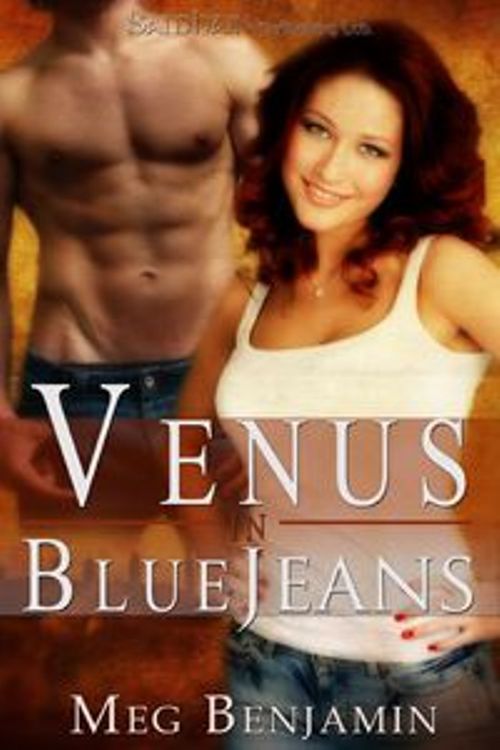
Venus in Blue Jeans, Meg Benjamin (Samhain, 2009)

This novel, coincidentally another Texas book, is different from the other books in this two-part blog. I’ve only read it twice, and those readings were both recent. I might have missed it if not for my friends and former Romance Vagabond companions, Lindsey (Managing Editor for Samhain), who sent me a copy, and Manda, whose rave first alerted me to the book. I immediately fell in love with Konigsburg, a small town that is not idyllic but rather filled with the kind of characters a reader can believe in. Docia Kent, bookstore owner, and Cal Toleffson, veterinarian, are relative newcomers to the town and still learning its quirks and customs. Their status offer a point of view that is different from the more common small-town heroine/hero who is either championing the hometown or in conflict with it. Another thing that set VIBJ apart from many contemporary romances is that while the attraction between Docia and Cal is instantaneous, a relationship develops between them before they fall into bed. The reader has time to find the characters likeable and to find their liking for one another as credible as their lust for one another. Their story is funny and sweet and sexy—a combination I favor, and the secondary characters are individual and interesting. Not many authors enter my autobuy list on the strength of one book. Meg Benjamin did. And Venus in Blue Jeans is just the first book in a four-book series that also includes Wedding Bell Blues, Be My Baby, and Long Time Gone.


What under-read books do you recommend I try? Do you have an autobuy list? What makes an author an autobuy for you?

Thursday, August 19, 2010

Reading Georgette Heyer

This week marks the 108th anniversary of the birth of Georgette Heyer, the founding mother of the Regency romance, born August 16, 1902. Celebrations of Heyer and her books are taking place throughout the blogosphere where Heyer enthusiasts are reviewing her books and sharing stories of their discovery and continuing love affair with this author who has maintained best-selling status for more than eight decades, since the 1926 publication of These Old Shades, her fifth novel.


If you are interested in some stellar review of many of Heyer’s books, I recommend Austenprose’s month-long celebration. Comments there will also earn you a chance at winning a copy of one of Heyer’s books. If you are interested in Heyer’s own words about her writing, I refer you to Jean Mason’s 1998 “interview” with Heyer at The Romance Reader. If you’re interested in a brief online biography of Heyer, I suggest Jay Dixon’s An Appreciation of Georgette Heyer. This blog is not a review, a sampling of Heyer quotes, or a biography, but it is a result of my having read all of these things and of some thoughts they inspired concerning my own experience as a Heyer reader.


Every Heyer enthusiast I know has a story of her—or his—first Heyer read. I’m no different. In the late 60s, my favorite reading material was Gothic romances by Mary Stewart, Barbara Michaels, Victoria Holt, etc.; Harlequin romances by Mary Burchell, Essie Summers, Sara Seale, and others; and gentle romances recommended by my mother by writers such as Emilie Loring, D. E. Stevenson, Grace Livingston Hill, and Elizabeth Cadell. On one visit to my local bookstore, I could find nothing that I hadn’t already read by any of my favorites and was persuaded by the salesclerk to give Heyer a try. That first book was Devil’s Cub. (If you look at the cover, I think you can see why I was sold on it.) I returned to the bookstore the next day to buy These Old Shades and left not only with Avon and Leonie’s story but also with Faro’s Daughter and Friday’s Child.

I went on to read nearly everything Heyer had written. So did my mother and my sister. Part of my joy in rereading Heyer is that each reading celebrates a connection with them as well as the wonders of Heyer’s world. I can almost hear my mother’s chuckle when I come to some of her favorite scenes. Friday’s Child was her favorite. I doubt if she knew how many times she read it. I still have that first copy. It’s coverless, and some of its pages are loose, but I can’t bear to discard it.

Heyer has another significance for me as well. She is a “respectable” romance writer, the only one that I found some colleagues in academia willing to admit they read. They might call the novels “froth,” but they didn’t deny their enjoyment of her work. So during all the years when I was a closet reader of romance, Heyer was the writer that I allowed myself to admit to reading, the one whose books I felt free to stick in a brief case or a book bag along with books by Faulkner, Woolf, and Proust. I wasn’t the only one discovering Heyer with those Bantam paperback editions in the 60s. Time placed her in exalted company in a 1964 review of False Colours:

By knowing more about Regency fops, rakes, routs and blades than anyone else alive, Georgette Heyer has turned what otherwise could be dismissed as a long series of sugary historical romances into a body of work that will probably be consulted by future scholars as the most detailed and accurate portrait of Regency life anywhere. She has also become the center of a genteel reading cult that has made her for years a runaway bestseller in England and now is spreading to the U.S., proliferating vociferously at ladies' luncheons and in lending libraries. But as with the late William Faulkner, you don't buy a book, you buy a world. If it suits you, you settle down forever.

Heyer’s world suits me admirably. I never tire of the time I spend there. In fact, I’ve read Heyer so often that I have a list of Heyer superlatives.


Most Admired Heroine: Sophy Stanton Lacy, The Grand Sophy


My favorite heroines tend to fall into two categories, those that I see something of myself in and those that possess characteristics I admire but to which I could never aspire. Sophy definitely falls into the second group. She is supremely confident of her ability to manage her own life and to solve the problems of those she cares about in the process. She’s wealthy, independent, daring, and tall—all things I’d love to be. She never allows herself to be intimidated by Charles Rivenhall’s censure or bested by Eugenia Wraxton’s meanness. She even manages an unethical moneylender. One of my favorite moments occurs when Sophy, goaded by Miss Wraxton’s efforts to advise her on proper behavior for a lady of quality, drives her down St. James Street—and in a high-perch phaeton no less.

Sophy says, “Of course, I should not have dared to do it without you sitting beside me to lend me credit, but you have assured me that your reputation is unassailable, and I see that I need have no scruple in gratifying my ambition. I daresay your consequence is great enough to make it quite a fashionable drive for ladies.”

And I want to cheer every time I read those words.

Best Loved Hero: Major Hugh Darracott,
The Unknown Ajax


Georgette Heyer began what continues to be the rule in Georgian/Regency romances. The heroes are men of rank and wealth. Among Heyer’s heroes are four dukes (including one who became a king), three marquises, five earls, three viscounts, three barons, five baronets, and an assortment of heirs and second sons with aristocratic connections but no titles.

The hero I love best belongs to the last group. The Unknown Ajax is not the most popular of Heyer’s books, although it is one she herself counted among her best, but it features a beta hero I adore: Hugh Darracott, a towering (six feet, four inches), Yorkshire-born, former military man and unwelcome heir to his grandfather’s title. The Darracott family expects the “weaver’s brat” forced upon them to be a graceless bumpkin, and he gives them what they expect—complete with a thick accent. But the bumpkin is a man of honor, intelligence, and humor, who saves the family name from scandal and wins the heroine’s respect and love.


Most Courageous Heroine: Mary Challoner, Devil’s Cub and Lady Hester Theale, Sprig Muslin

The practical, independent heroine who captures the heart and hand of a bad-boy hero is the stuff of which countless romances are made, but it was fresh when Heyer used it in one of her most popular books, and it continues to delight readers more than seventy years after its publication. Mary, fully aware that the fiery young Marquis of Vidal, forced to flee England because of a duel, has no honorable intentions toward her younger sister, determines to thwart silly Sophia’s plan to runaway with the arrogant lord. She takes her sister’s place, confident that once Vidal discovers the switch, he will leave her and her sister alone.

Instead, Vidal insists one woman is much like another and Mary’s brain may prove more effective than her sister’s beauty in alleviating his boredom during his exile. When reasoning with him fails, Mary defends her virtue by shooting him, thus persuading him that she is the “devilish strait-laced” young woman he first thought her to be. Vidal, who proves to have a most inconvenient code of honor that includes not ruining a virtuous young woman, insists that Mary must marry him. Mary refuses and has the strength to withstand Vidal’s determination to marry, to end a duel at considerable risk to herself, and to remain true to her own code when her emotions and society’s convention push her in the opposite direction.

Lady Hester Theale’s courage is quieter but no less real. Unmarried at twenty-nine, with no fortune and no congenial relatives, she refuses a marriage of convenience to the eminently eligible Sir Gareth Ludlow, despite the pressure her family brings to bear. Yet when Gareth needs her, she escapes her family, throws off the bonds of convention governing acceptable behavior for a spinster, and goes to his aid. Even after all of this, she accepts Gareth’s proposal only when she is certain love rather than just affection and respect motivate him.


Most Unforgettable Rake: Lord Jasper Damerel, Venetia


Damerel is no fake rake; he’s the genuine article, a libertine whose behavior is rumored to have killed his father, whose orgies scandalize the neighborhood for years afterwards, and whose reputation is so black that he has been used to frighten naughty children. Heyer’s first description of him reinforces the common perception: “He was taller than Venetia had first supposed, rather loose-limbed, and he bore himself with a faint suggestion of swashbuckling arrogance. As he advanced upon her Venetia perceived that he was dark, his countenance lean and rather swarthy, marked with lines of dissipation. A smile was curling his lips, but Venetia though she had never seen eyes so cynically bored.” Little wonder that Venetia is diverted by the thought of the jealousy that will consume a neighbor’s Corsair-aspiring son when he is confronted by this Byronic hero.

Of course, Damerel is more than a quintessential rake. He is also a man of intelligence, humor, frustrated idealism, and the good taste to fall in love with the heroine. He proves his nobility of soul by befriending the heroine’s brother, a brilliant misfit with a physical disability, and by trying to save the virtuous heroine from the man he knows himself to be. Thank goodness Venetia is one of Heyer’s managing heroines. She, with a remarkably clear-eyed understanding of Damerel, manages her own HEA.

Best Explanation of Being in Love: Frederica and The Marquis of Alverstoke, Frederica


One of the things I like best about Heyer’s couples is that their relationship grows. Attraction may be instantaneous, and the sexual chemistry is certainly strong, perhaps strongest in Venetia, but the couples develop a friendship too. They come to know one another’s strengths and weaknesses. One of my favorite Heyer scenes and one of my favorite descriptions of what being in love is occurs near the end of Frederica. Alverstoke has proposed to Frederica, who is not persuaded he can be in love with her. He responds, “It is merely that I find I cannot live without you, my adorable Frederica.”

She then says:
“Is it like that? Being in love? You see, I never was in love, so I don’t know. And I made up my mind years and years ago that I wouldn’t marry anyone unless I was truly in love with him. . . . It has always seemed to me that if one falls in love with a gentleman one becomes instantly blind to his faults. But I am not blind to your faults, and I do not think that everything you do and say is right! Only—is it being—not very comfortable—and cross—and not quite happy, when you aren’t there?

“That, my darling,” said his lordship, taking her ruthlessly into his arms, “is exactly what it is.”

Scene That Makes Me Laugh Hardest: Closing Chapter,                The Grand Sophy


When I think of Heyer’s books, I smile. I recall the scenes that struck me as the most humorous, and my smile broadens. I remember details, and I start to laugh quietly. Soon, if I’m at home, I’m pulling the book to reread the scene and laugh aloud. Choosing a favorite funny scene from the abundance of wit, incongruity, absurdity, and situational humor is not an easy task. Freddy Standen’s conversations with his father in Cotillion, Arabella’s foisting a mutt on Beaumaris in Arabella, the rescue of Richmond scene in The Unknown Ajax, the impenetrable egoism of the “Old Gentleman” in The Masqueraders, the irrepressible Felix in Frederica, the natural daughter scene in Sprig Muslin . . .

But the scene, or rather series of scenes, that never fails to leave me laughing till the tears run down my cheeks is the final chapter of The Grand Sophy with its wild assortment of characters--the wounded Charlbury (shot by Sophy), the newlywed Marquesa and Sir Vincent, the self-centered poet, the weeping Cecilia, the outraged Miss Wraxton, the pompous Lord Bromford, and the box of yellow ducklings—all managed superbly by the ever competent Sophy until the late-arriving Charles Rivenhall proposes and whisks her away. From the Marquesa’s demand that her new husband kill chickens for her through Charles’s unique proposal, I laugh.

Every few years I do a major rereading of Heyer’s Georgian/Regency novels. My last was in 2007, so it’s about time for another. Now which one should I reread first?

Are you a Heyer enthusiast? Which novels are your favorites? Do you have Heyer superlatives?