Thursday, September 30, 2010

Happy Birthday Meg, Jo, Beth, and Amy!


Today is the birthday of Little Women by Louisa May Alcott, one of the best loved books of my childhood. It was one of several books that I read because I was fascinated with the idea that my mother had read the same book as a little girl, but it became a favorite on its own merits. My sister and I reread Little Women and its sequels more times than we can remember, and we moved on to read Alcott’s other books for girls, including the lesser known ones such as Under the Lilacs and Jack and Jill. But none captured our imaginations as did the story of the March sisters, who became as real and as cherished as the cousins and friends who shared our lives. The first full-length stage production we ever saw was Little Women, performed by the drama department of the local college with matinees especially for area elementary schools. Even though we knew everything that would happen, we cried copiously when Beth died, and we argued heatedly about heroes, an argument that remains unresolved till this day. Today I celebrate Alcott’s story, my memories of it, and the remarkable history of a book that girls are still reading.


On September 30, 1868, the first volume of Little Women was published by Roberts Brothers of Boston. The book has never been out of print since. The girls who read that first edition of Little Women; or Meg, Jo, Beth, and Amy read only twenty-three chapters rather than the forty-seven that I read nearly a century later. That first edition ended with the words “So the curtain falls upon Meg, Jo, Beth, and Amy. Whether it ever rises again, depends upon the reception give the first act of the domestic drama called LITTLE WOMEN.”

Critical reception for that first volume was tepid at best. The Nation, for example, condemned it with faint praise, calling  it “an agreeable little story.” Even the author lacked real enthusiasm for the book. Alcott tried her best to get out of writing a girls’ story, much preferring to write about boys because she found them more interesting. In May 1968, she wrote in her journal, “Mr. N. [from her publishers] wants a girls' story, and I begin ‘Little Women.’ Marmee, Anna, and May all approve my plan. So I plod away, though I don't enjoy this sort of thing.” “Plodding” seems a strange description of the two and a half months of furious writing that produced the first volume. And despite the author’s reluctance and the critics’ condescension, her audience loved the book. More than 2000 copies sold immediately and another 3000 sold before the second volume was published.

In fact, readers wanted a sequel, and Alcott, surrendering to their requests and to pleas from her publishers, wrote the second volume. Originally called Good Wives, it was released April 14, 1869, and early sales more than doubled those of the first volume. Fourteen months later, more than 30,000 copies had been sold. In a letter written not long before the release of the second volume, Alcott wrote,

A sequel will be out early in April, & like all sequels will probably disappoint or disgust most readers, for publishers wont let authors finish up as they like but insist on having people married off in a wholesale manner which much afflicts me. ‘Jo’ should have remained a literary spinster but so many enthusiastic young ladies wrote to me clamorously demanding that she should marry Laurie, or somebody, that I didnt dare to refuse & out of perversity went & made a funny match for her. (The Selected Letters of Louisa May Alcott 124-25).

More than 140 years after Alcott wrote these words, some readers still complain about her choice of a "funny match" and feel cheated that Jo and Laurie didn’t get their HEA.


However, Little Women served its purpose for Alcott. It helped her to relieve some of her family’s pressing financial problems. It also made her an immensely popular writer and a founder of the new genre of juvenile fiction, the girls’ book. In 1870, parts one and two of Little Women were published together as a two-volume set, and in 1880, they were combined into a single volume. Alcott’s success with Little Women was followed by other girls’ books, including An Old Fashioned Girl (1870), Little Men: Life at Plumfield with Jo's Boys (1871), Eight Cousins (1874), Rose in Bloom (1876), Jo's Boys and How They Turned Out: A Sequel to "Little Men" (1886), and other lesser known books. Before her death in 1888, Alcott’s book sales had reached one million, and she had earned $200,000 from her writing.


But none of her other novels attained the iconic status of Little Women. Perhaps the unique position of this novel within Alcott’s oeuvre can be attributed to the character of Jo. From the beginning, the flawed Jo has been the character with whom most readers have connected. In an article, “Books That Girls Have Loved,” published in Lippincott's Monthly Magazine (Sept. 1897), Erin Graham wrote of the March sisters: "We liked them all, but with one voice Jo was declared our favorite. Every girl whom I have known regards the boyish Jo with feelings of tenderness. Meg was more domestic, Amy more graceful, and Beth more gentle; but Jo, dear old blundering Jo, romped into our hearts at once" (430-31). A century later, author Anna Quindlen, who put Little Women in first place on her list of “Ten Books for a Girl Who is Full of Beans (Or Ought to Be),” must have had Jo in mind when she described Alcott’s best-known novel as "the first great American coming-of-age book for girls, the companion piece to Huck Finn's raft trips down the Mississippi."


Countless girls have read Little Women in the past 142 years. They have grown up like Meg and Jo and Amy to become “good wives,” or like “Naughty Nan,” the irrepressible tomboy of Jo’s Boys, they have grown up to become become “spritely spinsters.” Writers, actresses, politicians, doctors, and teachers affirm the influence of Alcott’s first girls’ book on their lives. The novel has been adapted for stage, television, opera, anime, and more than a dozen movie versions from a 1919 version shot in and around the Alcott home to the 1994 version starring Wynona Ryder as Jo. My personal favorite is the 1933 George Cukor-directed film that starred Katharine Hepburn as Jo. An Oscar winner for Best Adapted Screenplay, that version also has been credited with being “an important step forward in the cinematic treatment of women.” I think Alcott would like that.


Did you read Little Women as a child? Was Jo your favorite character? What’s your favorite film version? Do you think Jo and Laurie should have ended up together?


Wednesday, September 22, 2010

Celebrate the Freedom to Read!


What do an anti-war comedy about a sex-strike in ancient Greece, a collection of poems for children, a Pulitzer-Prize-winning modern classic about racism, an exposé on the effects of welfare reform on the working poor, and a standard collegiate dictionary have in common? Lysistrata by Aristophanes, A Light in the Attic by Shel Silverstein, To Kill a Mockingbird by Harper Lee, Nickel and Dimed: On (Not) Getting By in America by Barbara Ehrenreich, and the Merriam-Webster Collegiate Dictionary are all books that have been challenged, restricted, removed, or banned. Lysistrata, along with other classics of Western literature such as Chaucer’s Canterbury Tales, Boccaccio’s Decameron, and Daniel Defoe’s Moll Flanders were all banned from the U. S, mails because they were deemed “lewd” or “indecent.” Shel Silverstein’s humorous poems have been banned in schools because some people believe poems such as “How Not to Have to Dry the Dishes” encourage “selfish and disrespectful behavior.” To Kill a Mockingbird, which has been much lauded during 2010, its 50th anniversary year, has been attacked for its use of racial slurs, profanity, and rape. Nickel and Dimed: On (Not) Getting By in America has been labeled as “anti-Christian” and “harmful to minors,” and the Merriam-Webster Collegiate Dictionary has been deemed suspect because it contains the words “oral sex.”


These books are just a handful from a long list of works that some individual or group has decided not only that they should not read but also that others should be denied access to them. Banned Book Week 2010: September 25-October 2 is the twenty-ninth such observance in the United States. Begun by the American Library Association (ALA) in 1982, when the increase in the number of challenges to books in schools, libraries, and bookstores created new concern about literary freedom, the week-long emphasis is designed to remind Americans that the freedom to choose what to read is dear and that the responsibility to ensure that all opinions, popular and unpopular, are heard is one we share.

Too often Banned Book Week is just routine. Libraries mount displays of banned books, blogs sporting the current ALA poster appear and bloggers deplore censorship. Groups of readers and writers, most of them small, gather to read from banned or challenged books, and people act properly indignant when they are reminded that some literary classic or popular children’s or YA title is on the most challenged list. But the week is barely a blip on the consciousness of most readers. We take our liberties for granted.


My hope is that the recent storm over the attack on Laura Halse Anderson’s Speak will remind readers that the threat of censorship is real in 2010. All it takes for school boards to consider removing books is one person convinced he or she owns The Truth and has the moral obligation to impose it upon others, throwing around words like “filth” and “pornography” to recruit the frightened and the uninformed to the cause. For those who may be unaware of the recent controversy, here’s a brief summary. Wesley Scroggins, an associate professor at Missouri State University, delivered a twenty-nine page screed to his local school board, characterizing current curricula as erroneous and immoral and calling for sweeping changes. Among the changes he demanded was the elimination of three books from the English curriculum: Kurt Vonnegut’s Slaughterhouse Five, named to Time Magazine’s All Time 100 novels; and two young adult novels, Anderson’s Speak (an award-winning novel about a girl who is raped and unable to talk about her experience to anyone) and Sarah Ockler’s Twenty Boy Summer (a novel about losing someone you love and the complexities of friendship). When the school board moved too slowly for Scroggins’s purpose, he took his case to the public in the form of an opinion piece in a local paper. He found Slaughterhouse Five “demeaning to . . . education” because of its “vulgar language” and “topics such as sex outside of marriage and homosexuality.” Speak earned his disapproval for “two rape scenes, drunken teenage parties, and teenage pre‐marital sex,” and he charged that Twenty Boy Summer “glorifies drunken teenage parties and teen pre‐marital sex.” He termed all three as “soft pornography.”

Slaughterhouse Five has already been eliminated from the curriculum. Speak and Twenty Boy Summer are under consideration. Books that are eliminated from the classroom are also withdrawn from the shelves of the school library. If Scroggins wins on all counts, he will have denied all students in the area high school free access to these books. Slaughterhouse Five has been a frequent target of banning; it is #67 on the ALA’s list of the 100 Most Frequently Challenged Books of 1990-1999. Anderson, author C. J. Redwine, and many others have spoken out eloquently in defense of Speak and against the horrific error of equating rape with sexual stimulation. Ockler, who is new to the censorship wars, states her views on her blog. Young adults who have found comfort and courage in the novels have added their voices to those speaking out.

I am angry and dismayed by Scroggins’s attack. As a former high school teacher, I have seen the importance of novels that address the real concerns of students.  As a Christian, I know that labeling Scroggins's position as “the Christian view” is a claim as false as any Scroggins himself made. But I am heartened by the response of readers and writers to the attack. Within hours of the news, a Twitter campaign (#SpeakLoudly) was gaining wide-spread support, and bloggers in large numbers were expressing their indignation over Scroggins’s challenges, offering their support to Anderson and Ockler, and making clear their opposition to censorship.

Wouldn’t it be wonderful if something positive and lasting came from Scroggins’s asinine accusations? I haven’t seen sales figures on the books involved, but I will be very surprised if all three titles aren’t selling more now than before the controversy. That’s a plus. I'm sure some of you added a Twibbon to your Twitter avatar and/or your Facebook profile photo.  If you choose, you can still blog about the issue or express your opinion on the blogs of others. These are all worthy actions.


But your activism can move beyond this single incident. According to ALA, “More than a thousand books have been challenged since 1982. The challenges have occurred in every state and in hundreds of communities" Your community may be one of them. Most of the challenged books will not be banned, but often challenges result in boards of education and school administrators and curriculum directors choosing a more covert form of censorship, avoiding books that may be controversial. Protecting our freedom to read is not a one-week or one-incident task. I hope you are participating in the Speak Loudly campaign and in your community’s celebration of literary freedom September 25-October 2, but I also hope you stay informed and ready to express your opinion when those who would limit your freedom sound their challenges during the other fifty-one weeks of the year. Remember the words of poet Archibald MacLeish: “Once you permit those who are convinced of their own superior rightness to censor and silence and suppress those who hold contrary opinions, just at that moment the citadel has been surrendered.”


I only have two questions for you this week. Do you believe in the freedom of a reader to choose her/his reading materials? What are you doing to defend that freedom?

Wednesday, September 15, 2010

Bandit Signs


I never knew what bandit signs were until artist John Morse nailed his haiku to streetlamps and utility poles at intersections around Atlanta and attracted the attention not only of local media but also of such representatives as The New Yorker , that prestigious and hoary periodical known for its commentary on popular culture, and The Guardian online, one of the highest-traffic English-language news sites on the web. Bandit signs, for those of you who share my unenlightened state and need a definition, are those ubiquitous illegal ads, usually designed to appeal to the desperate, that promise rapid weight loss, quick and easy loans, or high-paying work from the comfort of home. Morse combined this 21st-century guerilla marketing strategy with the ancient poetic form to create what he calls “poetic snapshots of the urban condition.” He placed fifty copies each of ten different “Roadside Haiku” at busy sites around the city, hoping to provoke passersby to stop and think.


I find Morse’s project interesting, and even viewing his haiku via the Internet has prompted me to stop and think. BUT—his project also set me thinking that bandit sign haiku would be a great way to get the message out about a favorite book or about romance fiction generally. Using guerilla stealth, we could post them in our own towns and cities, or we could be virtual gorillas and tweet the haiku or post it on a blog, in a forum, or on a Facebook wall. Since I’m much too timid to actually break a law, even if it’s only a violation of a city ordinance, I think I’ll opt for a cyber posting. You probably should too.


Remember that a haiku in English is a three-line, seventeen-syllable poem of 5-7-5 syllables.

Bodice Rippers? No!
Relationships, HEAs,
Empowered women.

Fairy tale romance
delivers sizzle and smiles:
A Kiss at Midnight.


My challenge to you: between now and midnight (EDT) September 22, write a haiku in praise of romance novels generally or of a specific novel and post your virtual bandit sign here and somewhere else in cyberspace. I mentioned some possibilities above--another blog, a forum, Facebook, Twitter. I'm sure you can think of others. Then, post a link here. I’ll let the Randomizer pick a winner from among those who post, and I’ll send the winner a bag of books that I consider bandit-sign worthy.

Thursday, September 9, 2010

Born in the Wrong Age


When I hear people, particularly romance readers and writers, talk about being born in the wrong age, they are typically speaking of a longing to dance at Almack’s, experience life at some intriguing court, or be claimed by some heart-stopping, chest-thumping alpha in a kilt. I don’t share those sentiments. Don’t misunderstand me. I’m eager to experience all of these things vicariously through the pages of a well-written book. I’ll even go so far as to concede that an occasional chest-thumping alpha, with or without kilt, can beguile me for a few hours, beta lover though I am. But the only way I’d sign up for time-traveling is if the ticket came with a guarantee to have me home by midnight. I’m sure I’d be more than ready by then for toilets that flush, showers that run hot, warm, or cold at my command, clean pajamas, Internet access, and, before bedtime, a reading lamp for a quick chapter or two in a paperback I paid under $10 for . I like my mod cons and have no wish to give them up even temporarily. I don’t even like camping. A friend, a camping enthusiast, once said to me accusingly, “Your idea of primitive is not having reservations at the hotel.” He was right. I’m afraid time traveling conditions might make a camp site seem positively luxurious.


However, I’ve been reading articles recently that make me wish I were now eighteen or twenty or even twenty-five and enrolled in college. I’m not one of those people who changed majors a dozen times--or even half a dozen. From the time I was old enough to understand what “major” in an academic context meant, I knew I’d be an English major. I never wavered from that idea. And I loved most of my course work from Greek tragedies to epic poems to Arthurian tales to Elizabethan plays to metaphysical poetry to 19th-century novels to modern and contemporary poetry to Southern literature, my field of specialization. I still read poetry and literary fiction along with romances and mysteries, and I can become just as defensive when some of my romance-reading friends dis Milton or Faulkner or Woolf as when some of my academic friends denigrate Nora Roberts (their usual target since she’s often the only romance writer they can name).


Even so, there were English courses I was forced to take that I loathed. I’d have more choices now. My course work could be fun! Just think--instead of taking that course in early American lit that had me sleeping in class, I could take “Reading the Historical Romance Novel.” Instead of ruining my eyes reading obscure 18th century plays that can be found only on microfiche, I could take “Harry Potter and the Age of Illusion.” Instead of horrifying my American lit professor with my suggestion that there should be two versions of Moby Dick, one without “all that whaling stuff,” I could be analyzing Jenny Crusie’s Bet Me, Georgette Heyer’s These Old Shades, Mary Balogh’s Slightly Dangerous, and Julia Quinn’s The Viscount Who Loved Me in a course called “Popular Literature: Romance.”


These are all actual courses. “Reading the Historical Romance Novel” is the title of the course Lauren Willig and Cara Elliott, both Yale graduates, taught at that university's Saybrook College last spring. I was not at all surprised to learn that eighty students applied for the eighteen spots in Willig and Elliott’s course. Had I been among their number, I would have been the first one to register. The syllabus includes a full week devoted to Lisa Kleypas and Loretta Chase and another devoted to Julia Quinn. The supplemental reading list boasts more than two hundred titles, including too many of my favorites too count and a few that were new to me. There’s even a section on beta heroes. Sigh! (You can see both the syllabus and the supplementary reading list at Cara Elliott's website.)

According to the Guardian, approximately seventy students are already registered for “Harry Potter and the Age of Illusion,” which will be offered at Durham University (UK) as part of the Education Studies BA degree. That same Guardian article quotes the university as saying that the course will require students to place Rowling’s series "in its social, cultural and educational context and understand some of the reasons for its popularity." I’m betting that the Cap’n over at Romance Writer’s Revenge would go for a Ph. D. if they offered enough courses like this one.

 The “Popular Literature: Romance” course is one Eric Selinger has been teaching for several years at DePaul University, one that lists the novels I mentioned as required reading. The course also offers students a chance to do a project on a subgenre or “exemplary text” not covered in class. I once had to work on a project that required me to count the number of performances of a Colley Cibber play. There are no words adequate to convey how much I would have preferred a project on any one of at least a dozen dozen “exemplary texts” in romance fiction.


Reading about these courses definitely makes me feel as if I were born in the wrong age. I bet I would never have cut class.

What about you? Have you ever felt you were born in the wrong age? Would you be ready to sign up for a ticket today if time travel were possible? Do the course descriptions make you wish you could be a student taking courses like these?


Wednesday, September 1, 2010

Ten Under-read Romance Novels: Part II


Just to refresh your memory, these five books, like those I blogged about last week, are novels that get less attention than others by the author or are the work of an author who gets less attention than her books merit. They offer the reader so much that I find it difficult to understand why more people don’t read these books and rave about them.


The Quiet Gentleman, Georgette Heyer (HQN, 2009--not edition shown above)

This tale of Gervase Frant, Earl St. Erth, and his return to Stanyon Castle and the relatives who had counted on his not surviving the war rarely shows up on lists of favorite Heyer novels. It’s certainly different from other Heyer romances. St. Erth is a far remove from arrogant, aristocratic heroes, and Drusilla Morville, a practical young woman with no claim to beauty and the disadvantage of a novel-writing mother who is a follower of Wollstonecraft and a democratic father who is a crony of Southey and Coleridge. The confident aristocrat and the innocent beauty do appear in the novel, but they are relegated to secondary roles. But readers who venture beyond the usual Heyer favorites will find in this novel some of the author’s most trenchant observation of Regency society and a heroine whose conversation is a delight. See the example below.


"Why, yes! It aches like the very deuce, but not, I assure you, as much as does my self-esteem! How came I to fall, like the rawest of greenhorns?" He received no answer to this, and added, with an effort at playfulness: "But I forget my manners! I must thank you for preserving my life, Miss Morville - even though it may have been at the cost of my cravat!"


"I am not, in general," said Miss Morville carefully, "an advocate for the employment of hyperbole in describing trifling services, but I believe, my lord, that in this instance I may be justly said to have done so."


Reforming Lord Ragsdale, Carla Kelly (Signet, 1995)

Carla Kelly is an under-read writer. I don’t understand why every book she writes isn’t on the best seller lists. Her most recent books, a Harlequin Historicals trilogy (Marrying the Captain, The Surgeon’s Lady, and Marrying the Royal Marine) joined the more than a dozen Kelly keepers already on my book shelves. Most of her novellas are there as well. But Reforming Lord Ragsdale is my favorite Kelly novel. First it pairs a self-destructive English aristocrat with an Irish indentured servant. Both characters are grieving losses they cannot speak of, but one of the book’s strengths is its wit and humor. Another strength is the friendship that develops between this unlikely pair as they save one another and as the hero grows to be the man he was meant to become. The first time I read the book I knew it was a romance and that the HEA was a given, but even knowing this, I couldn’t see how Kelly was going to allow the lord and the servant to remain together without pulling off some most un-Kelly trick. She doesn’t. They do. I love it!


Prospect Street, Emilie Richards (Mira, 2002)

Emilie Richards is one of those writers that I have followed through several genres and enjoyed every part of the journey. I started reading her books when she was writing categories, and her Men of Midnight trilogy and The Trouble with Joe are still among my keepers. I’ve read all her single-titles from Iron Lace (1996) through Fortunate Harbor (2010), including her Shenandoah Album books and her Ministry is Murder mysteries. But Prospect Street is the one I return to again and again. Faith Bronson leads a privileged life as the daughter of a Senator, the wife of a conservative lobbyist, and the mother of a son and a daughter. One evening she sets out to surprise her husband at their cabin and finds him in the arms of his male lover, a journalist. Her private discovery is followed by a media frenzy that insures her husband loses his job with Promise the Children, the organization he works for. Not only is Faith’s marriage disintegrating, but suddenly money is also a major concern. She finds sanctuary in a house on Prospect Street, a fixer-upper that has been in her mother’s family for generations. Prospect Street is the story of Faith’s journey to redefine herself and her relationships with her parents, her former husband, her children, the new man in her life, and the house on Prospect Street and the secrets it holds. Richards doesn’t vilify David Bronson, and she doesn’t turn Faith Bronson into a saint. He is the product of a conservative Christian upbringing and has spent his life denying his sexual preference. She is filled with anger and resentment over the shambles of her life. Their children are confused and troubled; the daughter Remy particularly is transformed by the destruction of the life she has known, changing from good girl to bitter, rebellious teen who refuses to see her father and constantly challenges her mother. Richards does not use her novel to sell a political or religious (or anti-religious) message. She presents complex characters with messy lives who struggle to forgive and to grow. The ending may be a bit too easy for all this complexity, but the book is a fascinating, human story.


In the Midnight Rain, Ruth Wind (HarperTorch 2000)

Whether she’s writing as Barbara Samuel, Barbara O’Neal, or Ruth Wind, this writer creates stories that engage me intellectually and emotionally. She also has a gift for creating places so detailed and richly textured that I finish her books feeling as if I’ve smelled the flowers and felt the breezes that ruffle the trees. Pine Bend, Texas, the setting of In the Midnight Rain is a place I know by heart after half a dozen readings of this book since its publication in 2000. Ellie Connor, the heroine, is a writer whose specialty is biographies of musicians. She comes to Pine Bend to research her next subject, Mabel Beauvais, a gorgeous and talented blues singer who mysteriously disappeared just as she was on the cusp of stardom. Ellie is also searching for her father; the only thing she knows about him is that a post card from her mother links him to this East Texas town. Via the Internet, Ellie becomes friendly with Dr. Laurence “Blue” Reynard, a handsome, wealthy widower, who offers Ellie and April, her dog, a place to stay while she is in Pine Bend. Blue is a needy soul whose love of music is as deep as Ellie’s, and despite his reputation as a heartbreaker, Ellie finds him irresistible. Ellie and Blue’s love story is interwoven with the double mystery and connected to the lives of a large and fascinating cast of secondary characters—black and white. These characters, major and minor, are flawed adults who inhabit a place entangled in history, personal and public. Racism is part of the world Wind shows readers, but so are the solid friendships that exist across racial lines. This is a novel as filled with difficult truths and emotional power as the blues beloved by the characters. And, unlike some of the under-read books I’ve blogged about that are hard to find, In the Midnight Rain is now available as an ebook.


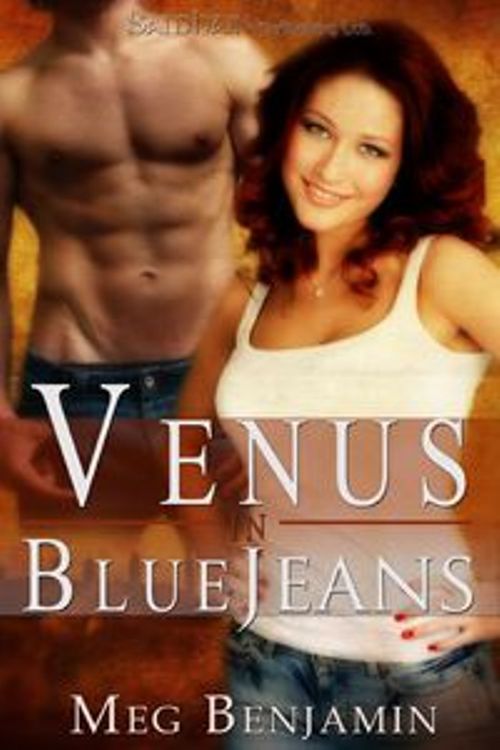
Venus in Blue Jeans, Meg Benjamin (Samhain, 2009)

This novel, coincidentally another Texas book, is different from the other books in this two-part blog. I’ve only read it twice, and those readings were both recent. I might have missed it if not for my friends and former Romance Vagabond companions, Lindsey (Managing Editor for Samhain), who sent me a copy, and Manda, whose rave first alerted me to the book. I immediately fell in love with Konigsburg, a small town that is not idyllic but rather filled with the kind of characters a reader can believe in. Docia Kent, bookstore owner, and Cal Toleffson, veterinarian, are relative newcomers to the town and still learning its quirks and customs. Their status offer a point of view that is different from the more common small-town heroine/hero who is either championing the hometown or in conflict with it. Another thing that set VIBJ apart from many contemporary romances is that while the attraction between Docia and Cal is instantaneous, a relationship develops between them before they fall into bed. The reader has time to find the characters likeable and to find their liking for one another as credible as their lust for one another. Their story is funny and sweet and sexy—a combination I favor, and the secondary characters are individual and interesting. Not many authors enter my autobuy list on the strength of one book. Meg Benjamin did. And Venus in Blue Jeans is just the first book in a four-book series that also includes Wedding Bell Blues, Be My Baby, and Long Time Gone.


What under-read books do you recommend I try? Do you have an autobuy list? What makes an author an autobuy for you?

Wednesday, August 25, 2010

Ten Under-read Romance Novels: Part I


This past Monday the LimeWire Music Blog posted a list of ten “unsung” country songs, songs that were not the commercial hits of a particular artist but were well worth listening to and should have been more successful. I probably would never have read the blog except for the fact that Trisha Yearwood’s version of Gretchen Peters’s “On a Bus to St. Cloud” was #1 on the list. It’s a favorite of mine, one of those songs that move me to tears every time I listen to them. Some of you know that I love lists, so it should come as no surprise that my mind moved from unsung country songs to their equivalent among romance novels. I thought about those books that get less attention than others by the author or by an author who gets less attention than her work merits but that offer the reader so much that I find it difficult to understand why more people don’t read these books and rave about them.


Jo Beverley, Forbidden Magic (Signet, 2005)


No, I don’t mean Forbidden. Forbidden is part of Beverley’s Company of Rogues series, and it gets lots of attention. Some people love its virginal hero and sexually experienced heroine. Others decry it as a ‘rape book,” but either way, it is read and talked about. Forbidden Magic is a very different book. First it is has lots of humor, more than any other Jo Bev book, I think. Then, it’s a Christmas book, always a plus for me. It also has a touch of the paranormal, not usual fare for Beverley. Finally, the Earl of Saxonhurst is an eccentric and wonderfully engaging hero. He gathers misfits around him including a misogynistic parrot and a superlatively ugly dog, he throws temper tantrums (throw being the operative word since he literally throws bric-a-brac while his servants bet on which ugly object will be destroyed next), and he falls convincingly in love with the heroine after their convenient marriage. Sax is one of my all-time favorite heroes.


Connie Brockway, My Dearest Enemy (Dell, 1998)

My Dearest Enemy is not exactly a forgotten book. After all, it won a RITA in 1999, and I know several people who share my conviction that this is Brockway’s best book. Still, when discussions of Brockway’s work comes up in RL or online conversations, As You Desire and All Through the Night, polar opposites on the angst and darkness scale, are the books most often mentioned. Don’t get me wrong, When Harry Bickered with Dizzy (AYD) is a delightful romance, one I have reread and reread, and All Through the Night is the book against which I measure all wrenchingly emotional, darkly erotic romances, but if my house were on fire and I could save only one Brockway book, I’d reach for My Dearest Enemy. First, I know of no other book that pairs a young, suffragist heroine and a nerd-become-intrepid-explorer hero. Second, it’s in part an epistolary novel, and I love epistolary novels, especially when the letters are as wonderfully witty and genuine as the letters Avery and Lily exchange. When they meet again face-to-face, the sexual tension is superbly done, and the conflicts they must overcome are deftly and credibly developed. The secondary characters are richly drawn. Bernard, the boy who is part of Lily’s unusual household, is near the top of my list of characters whose story I long to read.


Loretta Chase, The Devil’s Delilah (Fawcett, 1990)


I confess that I am a total Loretta Chase fangirl. I think Lord of Scoundrels deserves its place at the top of all-time best romances, the hope of finding another novella as good as “The Mad Earl’s Bride” keeps me reading anthologies, and the Carsingtons are in my top five fictional families. I don’t want to take one iota of praise away from any of Chase’s other books; I just want more people to read and rejoice in The Devil’s Delilah. I thought once of creating a quiz using the choice of a favorite Chase hero to reveal personality. The only problem was I couldn’t choose one favorite Chase hero myself. The best I could do was an eight-way tie. Jack Langdon, the hero of The Devil’s Delilah was among the eight. I can’t resist a bookworm hero, and when you add a pistol-toting heroine with a plan to take care of those she loves, it’s hardly surprising that I find this book a comic gem that should be relished by romance readers everywhere. Delilah’s parents are also marvelous, even more charming than the Carsington parents. From time to time, I consider writing an article on fathers in Chase’s novels. If I ever do so, “Devil” Desmond will definitely feature prominently in the discussion.


Barbara Freethy, Daniel’s Gift (Avon, 1996)


When you think of Barbara Freethy, you may think of her recent secret-filled Angel’s Bay books or one of her character-driven romantic suspense titles (I know that seems oxymoronic) such as All She Ever Wanted or Silent Run, and I’ve read and enjoyed these books. But the first book that comes to mind when I hear her name is Daniel’s Gift, her first book and a 1996 RITA winner. It’s a great example of how a great story can overcome a reader’s prejudices. DG had three strikes against my even reading it: (1) it is a secret baby book, a trope I generally dislike; (2) the hero is a married man, which offends my moral code; and (3) it has a child in jeopardy plot, something I avoid like the plague. But I bought this book back in my pre-internet days, and I chose it because the cover copy promised a reunion romance with a guardian angel, neither of which I could resist. And I loved it! I loved Jenny’s strength and her commitment to providing for her son, I loved Danny, who seemed remarkably similar in his curiosity and determination to the little boys in my life and heart, and I adored Jacob, Danny’s guardian angel. I was much slower warming up to Luke, but I came to understand him—although he remained a distant fourth in my affections. My favorite books are those that move me to both laughter and tears. Daniel’s Gift accomplishes this so well that it’s been on a keeper shelf for more than fourteen years.


Kathleen Gilles Seidel, Till the Stars Fall (Onyx, 1994)


Seidel is an extraordinary writer, and Till the Stars Fall is one of the best romances I have ever read. I’ve lost count now of how many times I’ve read it. Just a few weeks ago, I pulled it off the shelf to find a passage I wanted to use as the Monday Puzzler, a weekly feature on the Eloisa James/Julia Quinn bulletin board, and I ended up reading the full novel yet again. Seidel gives both the Minnesota mining town and the Princeton campus settings a reality that makes me feel as if I know them, although I’ve never visited either place. This book is one of the best examples I know of world building in a contemporary novel. Seidel’s world is so complete that she can include Rolling Stone articles, interviews, and other bits of the culture of the 70s and persuade me that I must have heard Dodd Hall sing the Cinnamon Girl songs. Krissa is one of my favorite heroines because she has the kind of quiet strength that holds together families and communities. She also places a high value on who she is as herself, a rare quality in romance heroine. And Quinn—a Renaissance man who is a musician, a writer, and a doctor—is an irresistible hero. Finally, there’s the wonder that is Seidel’s prose. I wish I could buy a copy of Till the Stars Fall and place it in the hands of every romance reader I know. “Please read it,” I would say, “and see all that a contemporary romance can be.”

What romances do you consider “under-read”? If you could choose one romance to place in the hands of all the romance readers you know, what would your choice be?


Next week I’ll post Part II of Ten Under-read Romance Novels, and I’ll reverse the ratio of contemporaries to historicals. I hope you’ll join me then.


Thursday, August 19, 2010

Reading Georgette Heyer

This week marks the 108th anniversary of the birth of Georgette Heyer, the founding mother of the Regency romance, born August 16, 1902. Celebrations of Heyer and her books are taking place throughout the blogosphere where Heyer enthusiasts are reviewing her books and sharing stories of their discovery and continuing love affair with this author who has maintained best-selling status for more than eight decades, since the 1926 publication of These Old Shades, her fifth novel.


If you are interested in some stellar review of many of Heyer’s books, I recommend Austenprose’s month-long celebration. Comments there will also earn you a chance at winning a copy of one of Heyer’s books. If you are interested in Heyer’s own words about her writing, I refer you to Jean Mason’s 1998 “interview” with Heyer at The Romance Reader. If you’re interested in a brief online biography of Heyer, I suggest Jay Dixon’s An Appreciation of Georgette Heyer. This blog is not a review, a sampling of Heyer quotes, or a biography, but it is a result of my having read all of these things and of some thoughts they inspired concerning my own experience as a Heyer reader.


Every Heyer enthusiast I know has a story of her—or his—first Heyer read. I’m no different. In the late 60s, my favorite reading material was Gothic romances by Mary Stewart, Barbara Michaels, Victoria Holt, etc.; Harlequin romances by Mary Burchell, Essie Summers, Sara Seale, and others; and gentle romances recommended by my mother by writers such as Emilie Loring, D. E. Stevenson, Grace Livingston Hill, and Elizabeth Cadell. On one visit to my local bookstore, I could find nothing that I hadn’t already read by any of my favorites and was persuaded by the salesclerk to give Heyer a try. That first book was Devil’s Cub. (If you look at the cover, I think you can see why I was sold on it.) I returned to the bookstore the next day to buy These Old Shades and left not only with Avon and Leonie’s story but also with Faro’s Daughter and Friday’s Child.

I went on to read nearly everything Heyer had written. So did my mother and my sister. Part of my joy in rereading Heyer is that each reading celebrates a connection with them as well as the wonders of Heyer’s world. I can almost hear my mother’s chuckle when I come to some of her favorite scenes. Friday’s Child was her favorite. I doubt if she knew how many times she read it. I still have that first copy. It’s coverless, and some of its pages are loose, but I can’t bear to discard it.

Heyer has another significance for me as well. She is a “respectable” romance writer, the only one that I found some colleagues in academia willing to admit they read. They might call the novels “froth,” but they didn’t deny their enjoyment of her work. So during all the years when I was a closet reader of romance, Heyer was the writer that I allowed myself to admit to reading, the one whose books I felt free to stick in a brief case or a book bag along with books by Faulkner, Woolf, and Proust. I wasn’t the only one discovering Heyer with those Bantam paperback editions in the 60s. Time placed her in exalted company in a 1964 review of False Colours:

By knowing more about Regency fops, rakes, routs and blades than anyone else alive, Georgette Heyer has turned what otherwise could be dismissed as a long series of sugary historical romances into a body of work that will probably be consulted by future scholars as the most detailed and accurate portrait of Regency life anywhere. She has also become the center of a genteel reading cult that has made her for years a runaway bestseller in England and now is spreading to the U.S., proliferating vociferously at ladies' luncheons and in lending libraries. But as with the late William Faulkner, you don't buy a book, you buy a world. If it suits you, you settle down forever.

Heyer’s world suits me admirably. I never tire of the time I spend there. In fact, I’ve read Heyer so often that I have a list of Heyer superlatives.


Most Admired Heroine: Sophy Stanton Lacy, The Grand Sophy


My favorite heroines tend to fall into two categories, those that I see something of myself in and those that possess characteristics I admire but to which I could never aspire. Sophy definitely falls into the second group. She is supremely confident of her ability to manage her own life and to solve the problems of those she cares about in the process. She’s wealthy, independent, daring, and tall—all things I’d love to be. She never allows herself to be intimidated by Charles Rivenhall’s censure or bested by Eugenia Wraxton’s meanness. She even manages an unethical moneylender. One of my favorite moments occurs when Sophy, goaded by Miss Wraxton’s efforts to advise her on proper behavior for a lady of quality, drives her down St. James Street—and in a high-perch phaeton no less.

Sophy says, “Of course, I should not have dared to do it without you sitting beside me to lend me credit, but you have assured me that your reputation is unassailable, and I see that I need have no scruple in gratifying my ambition. I daresay your consequence is great enough to make it quite a fashionable drive for ladies.”

And I want to cheer every time I read those words.

Best Loved Hero: Major Hugh Darracott,
The Unknown Ajax


Georgette Heyer began what continues to be the rule in Georgian/Regency romances. The heroes are men of rank and wealth. Among Heyer’s heroes are four dukes (including one who became a king), three marquises, five earls, three viscounts, three barons, five baronets, and an assortment of heirs and second sons with aristocratic connections but no titles.

The hero I love best belongs to the last group. The Unknown Ajax is not the most popular of Heyer’s books, although it is one she herself counted among her best, but it features a beta hero I adore: Hugh Darracott, a towering (six feet, four inches), Yorkshire-born, former military man and unwelcome heir to his grandfather’s title. The Darracott family expects the “weaver’s brat” forced upon them to be a graceless bumpkin, and he gives them what they expect—complete with a thick accent. But the bumpkin is a man of honor, intelligence, and humor, who saves the family name from scandal and wins the heroine’s respect and love.


Most Courageous Heroine: Mary Challoner, Devil’s Cub and Lady Hester Theale, Sprig Muslin

The practical, independent heroine who captures the heart and hand of a bad-boy hero is the stuff of which countless romances are made, but it was fresh when Heyer used it in one of her most popular books, and it continues to delight readers more than seventy years after its publication. Mary, fully aware that the fiery young Marquis of Vidal, forced to flee England because of a duel, has no honorable intentions toward her younger sister, determines to thwart silly Sophia’s plan to runaway with the arrogant lord. She takes her sister’s place, confident that once Vidal discovers the switch, he will leave her and her sister alone.

Instead, Vidal insists one woman is much like another and Mary’s brain may prove more effective than her sister’s beauty in alleviating his boredom during his exile. When reasoning with him fails, Mary defends her virtue by shooting him, thus persuading him that she is the “devilish strait-laced” young woman he first thought her to be. Vidal, who proves to have a most inconvenient code of honor that includes not ruining a virtuous young woman, insists that Mary must marry him. Mary refuses and has the strength to withstand Vidal’s determination to marry, to end a duel at considerable risk to herself, and to remain true to her own code when her emotions and society’s convention push her in the opposite direction.

Lady Hester Theale’s courage is quieter but no less real. Unmarried at twenty-nine, with no fortune and no congenial relatives, she refuses a marriage of convenience to the eminently eligible Sir Gareth Ludlow, despite the pressure her family brings to bear. Yet when Gareth needs her, she escapes her family, throws off the bonds of convention governing acceptable behavior for a spinster, and goes to his aid. Even after all of this, she accepts Gareth’s proposal only when she is certain love rather than just affection and respect motivate him.


Most Unforgettable Rake: Lord Jasper Damerel, Venetia


Damerel is no fake rake; he’s the genuine article, a libertine whose behavior is rumored to have killed his father, whose orgies scandalize the neighborhood for years afterwards, and whose reputation is so black that he has been used to frighten naughty children. Heyer’s first description of him reinforces the common perception: “He was taller than Venetia had first supposed, rather loose-limbed, and he bore himself with a faint suggestion of swashbuckling arrogance. As he advanced upon her Venetia perceived that he was dark, his countenance lean and rather swarthy, marked with lines of dissipation. A smile was curling his lips, but Venetia though she had never seen eyes so cynically bored.” Little wonder that Venetia is diverted by the thought of the jealousy that will consume a neighbor’s Corsair-aspiring son when he is confronted by this Byronic hero.

Of course, Damerel is more than a quintessential rake. He is also a man of intelligence, humor, frustrated idealism, and the good taste to fall in love with the heroine. He proves his nobility of soul by befriending the heroine’s brother, a brilliant misfit with a physical disability, and by trying to save the virtuous heroine from the man he knows himself to be. Thank goodness Venetia is one of Heyer’s managing heroines. She, with a remarkably clear-eyed understanding of Damerel, manages her own HEA.

Best Explanation of Being in Love: Frederica and The Marquis of Alverstoke, Frederica


One of the things I like best about Heyer’s couples is that their relationship grows. Attraction may be instantaneous, and the sexual chemistry is certainly strong, perhaps strongest in Venetia, but the couples develop a friendship too. They come to know one another’s strengths and weaknesses. One of my favorite Heyer scenes and one of my favorite descriptions of what being in love is occurs near the end of Frederica. Alverstoke has proposed to Frederica, who is not persuaded he can be in love with her. He responds, “It is merely that I find I cannot live without you, my adorable Frederica.”

She then says:
“Is it like that? Being in love? You see, I never was in love, so I don’t know. And I made up my mind years and years ago that I wouldn’t marry anyone unless I was truly in love with him. . . . It has always seemed to me that if one falls in love with a gentleman one becomes instantly blind to his faults. But I am not blind to your faults, and I do not think that everything you do and say is right! Only—is it being—not very comfortable—and cross—and not quite happy, when you aren’t there?

“That, my darling,” said his lordship, taking her ruthlessly into his arms, “is exactly what it is.”

Scene That Makes Me Laugh Hardest: Closing Chapter,                The Grand Sophy


When I think of Heyer’s books, I smile. I recall the scenes that struck me as the most humorous, and my smile broadens. I remember details, and I start to laugh quietly. Soon, if I’m at home, I’m pulling the book to reread the scene and laugh aloud. Choosing a favorite funny scene from the abundance of wit, incongruity, absurdity, and situational humor is not an easy task. Freddy Standen’s conversations with his father in Cotillion, Arabella’s foisting a mutt on Beaumaris in Arabella, the rescue of Richmond scene in The Unknown Ajax, the impenetrable egoism of the “Old Gentleman” in The Masqueraders, the irrepressible Felix in Frederica, the natural daughter scene in Sprig Muslin . . .

But the scene, or rather series of scenes, that never fails to leave me laughing till the tears run down my cheeks is the final chapter of The Grand Sophy with its wild assortment of characters--the wounded Charlbury (shot by Sophy), the newlywed Marquesa and Sir Vincent, the self-centered poet, the weeping Cecilia, the outraged Miss Wraxton, the pompous Lord Bromford, and the box of yellow ducklings—all managed superbly by the ever competent Sophy until the late-arriving Charles Rivenhall proposes and whisks her away. From the Marquesa’s demand that her new husband kill chickens for her through Charles’s unique proposal, I laugh.

Every few years I do a major rereading of Heyer’s Georgian/Regency novels. My last was in 2007, so it’s about time for another. Now which one should I reread first?

Are you a Heyer enthusiast? Which novels are your favorites? Do you have Heyer superlatives?