Just to refresh your memory, these five books, like those I blogged about last week, are novels that get less attention than others by the author or are the work of an author who gets less attention than her books merit. They offer the reader so much that I find it difficult to understand why more people don’t read these books and rave about them.
The Quiet Gentleman, Georgette Heyer (HQN, 2009--not edition shown above)
This tale of Gervase Frant, Earl St. Erth, and his return to Stanyon Castle and the relatives who had counted on his not surviving the war rarely shows up on lists of favorite Heyer novels. It’s certainly different from other Heyer romances. St. Erth is a far remove from arrogant, aristocratic heroes, and Drusilla Morville, a practical young woman with no claim to beauty and the disadvantage of a novel-writing mother who is a follower of Wollstonecraft and a democratic father who is a crony of Southey and Coleridge. The confident aristocrat and the innocent beauty do appear in the novel, but they are relegated to secondary roles. But readers who venture beyond the usual Heyer favorites will find in this novel some of the author’s most trenchant observation of Regency society and a heroine whose conversation is a delight. See the example below.
"Why, yes! It aches like the very deuce, but not, I assure you, as much as does my self-esteem! How came I to fall, like the rawest of greenhorns?" He received no answer to this, and added, with an effort at playfulness: "But I forget my manners! I must thank you for preserving my life, Miss Morville - even though it may have been at the cost of my cravat!"
"I am not, in general," said Miss Morville carefully, "an advocate for the employment of hyperbole in describing trifling services, but I believe, my lord, that in this instance I may be justly said to have done so."
Reforming Lord Ragsdale, Carla Kelly (Signet, 1995)
Carla Kelly is an under-read writer. I don’t understand why every book she writes isn’t on the best seller lists. Her most recent books, a Harlequin Historicals trilogy (Marrying the Captain, The Surgeon’s Lady, and Marrying the Royal Marine) joined the more than a dozen Kelly keepers already on my book shelves. Most of her novellas are there as well. But Reforming Lord Ragsdale is my favorite Kelly novel. First it pairs a self-destructive English aristocrat with an Irish indentured servant. Both characters are grieving losses they cannot speak of, but one of the book’s strengths is its wit and humor. Another strength is the friendship that develops between this unlikely pair as they save one another and as the hero grows to be the man he was meant to become. The first time I read the book I knew it was a romance and that the HEA was a given, but even knowing this, I couldn’t see how Kelly was going to allow the lord and the servant to remain together without pulling off some most un-Kelly trick. She doesn’t. They do. I love it!

Prospect Street, Emilie Richards (Mira, 2002)
Emilie Richards is one of those writers that I have followed through several genres and enjoyed every part of the journey. I started reading her books when she was writing categories, and her Men of Midnight trilogy and The Trouble with Joe are still among my keepers. I’ve read all her single-titles from Iron Lace (1996) through Fortunate Harbor (2010), including her Shenandoah Album books and her Ministry is Murder mysteries. But Prospect Street is the one I return to again and again. Faith Bronson leads a privileged life as the daughter of a Senator, the wife of a conservative lobbyist, and the mother of a son and a daughter. One evening she sets out to surprise her husband at their cabin and finds him in the arms of his male lover, a journalist. Her private discovery is followed by a media frenzy that insures her husband loses his job with Promise the Children, the organization he works for. Not only is Faith’s marriage disintegrating, but suddenly money is also a major concern. She finds sanctuary in a house on Prospect Street, a fixer-upper that has been in her mother’s family for generations. Prospect Street is the story of Faith’s journey to redefine herself and her relationships with her parents, her former husband, her children, the new man in her life, and the house on Prospect Street and the secrets it holds. Richards doesn’t vilify David Bronson, and she doesn’t turn Faith Bronson into a saint. He is the product of a conservative Christian upbringing and has spent his life denying his sexual preference. She is filled with anger and resentment over the shambles of her life. Their children are confused and troubled; the daughter Remy particularly is transformed by the destruction of the life she has known, changing from good girl to bitter, rebellious teen who refuses to see her father and constantly challenges her mother. Richards does not use her novel to sell a political or religious (or anti-religious) message. She presents complex characters with messy lives who struggle to forgive and to grow. The ending may be a bit too easy for all this complexity, but the book is a fascinating, human story.

In the Midnight Rain, Ruth Wind (HarperTorch 2000)
Whether she’s writing as Barbara Samuel, Barbara O’Neal, or Ruth Wind, this writer creates stories that engage me intellectually and emotionally. She also has a gift for creating places so detailed and richly textured that I finish her books feeling as if I’ve smelled the flowers and felt the breezes that ruffle the trees. Pine Bend, Texas, the setting of In the Midnight Rain is a place I know by heart after half a dozen readings of this book since its publication in 2000. Ellie Connor, the heroine, is a writer whose specialty is biographies of musicians. She comes to Pine Bend to research her next subject, Mabel Beauvais, a gorgeous and talented blues singer who mysteriously disappeared just as she was on the cusp of stardom. Ellie is also searching for her father; the only thing she knows about him is that a post card from her mother links him to this East Texas town. Via the Internet, Ellie becomes friendly with Dr. Laurence “Blue” Reynard, a handsome, wealthy widower, who offers Ellie and April, her dog, a place to stay while she is in Pine Bend. Blue is a needy soul whose love of music is as deep as Ellie’s, and despite his reputation as a heartbreaker, Ellie finds him irresistible. Ellie and Blue’s love story is interwoven with the double mystery and connected to the lives of a large and fascinating cast of secondary characters—black and white. These characters, major and minor, are flawed adults who inhabit a place entangled in history, personal and public. Racism is part of the world Wind shows readers, but so are the solid friendships that exist across racial lines. This is a novel as filled with difficult truths and emotional power as the blues beloved by the characters. And, unlike some of the under-read books I’ve blogged about that are hard to find, In the Midnight Rain is now available as an ebook.

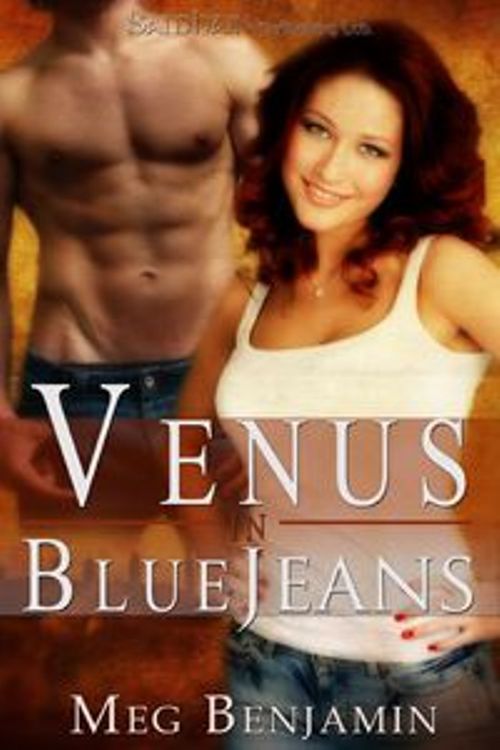
Venus in Blue Jeans, Meg Benjamin (Samhain, 2009)
This novel, coincidentally another Texas book, is different from the other books in this two-part blog. I’ve only read it twice, and those readings were both recent. I might have missed it if not for my friends and former Romance Vagabond companions, Lindsey (Managing Editor for Samhain), who sent me a copy, and Manda, whose rave first alerted me to the book. I immediately fell in love with Konigsburg, a small town that is not idyllic but rather filled with the kind of characters a reader can believe in. Docia Kent, bookstore owner, and Cal Toleffson, veterinarian, are relative newcomers to the town and still learning its quirks and customs. Their status offer a point of view that is different from the more common small-town heroine/hero who is either championing the hometown or in conflict with it. Another thing that set
VIBJ apart from many contemporary romances is that while the attraction between Docia and Cal is instantaneous, a relationship develops between them before they fall into bed. The reader has time to find the characters likeable and to find their liking for one another as credible as their lust for one another. Their story is funny and sweet and sexy—a combination I favor, and the secondary characters are individual and interesting. Not many authors enter my autobuy list on the strength of one book. Meg Benjamin did. And
Venus in Blue Jeans is just the first book in a four-book series that also includes
Wedding Bell Blues, Be My Baby, and Long Time Gone.
What under-read books do you recommend I try? Do you have an autobuy list? What makes an author an autobuy for you?