Showing posts with label my mother's books. Show all posts

Saturday, April 6, 2013

My Mother's Books, Part 6: D. E. Stevenson (1892-1973)


Before Susan Elizabeth Phillips had her Seppies, D. E. Stevenson had her Dessies. In the case of the latter, they pay visits to Moffat in Dumfriesshire where Stevenson lived for the last three decades of her life rather that showing up for book signings, but their loyalty to Stevenson is just as intense and their knowledge of her characters just as detailed as that of any SEP fan. My mother never made any pilgrimages to Moffat, but she loved Stevenson’s books and passed that love on to me. My fascination with Scotland began with Stevenson’s books, and I still halfway believe that if I ever visited the Scottish Border country, I would find Dunnian with some descendant of Celia Dunne living there. When I think of romances set in Scotland, the books of Stevenson are among the first that come to mind. Even after many rereading, her characters come alive for me, and the world of her novels offers an escape to a simpler, less harried place.


Dorothy Emily Stevenson was born November 18, 1892, in Edinburgh, Scotland. Her father was a first cousin of Robert Louis Stevenson, and D. E. Stevenson claimed that writing was “in her blood.”  She began writing as a child, hiding in a closet to do so since her parents discouraged her efforts. Stevenson persisted even in the face of their disapproval, although she conformed in other ways. She made her debut in Edinburgh in 1913, and three years later, she married Major James Reid Peploe, a young officer home recovering from war wounds. Their first child was born with a year, followed by three other children over the next fourteen years. 


Stevenson published two volumes of poetry, one in 1913 and one in 1926, with a novel, Peter West (1923) between them, none of which attracted much attention. But it wasn’t until the early 1930s that she began writing the books that would earn her an international following. A friend whose daughter was engaged to an army officer borrowed Stevenson’s diary to gain an understanding of the life her daughter could expect to lead, and she found Stevenson’s account of military life so engrossing that she urged Stevenson to publish her diary. Instead, Stevenson drew on the diary to write Mrs. Tim of the Regiment (1932), the fictional diary of Hester Christie, the wife of army officer Tim Christie. Stevenson maintained the diary form in her subsequent Mrs. Tim books that carried Hester and her family through World War II and the post-war period: Golden Days (1934), published with Mrs. Tim of the Regiment as Mrs. Tim Christie (1940) in the U. S., Mrs. Tim Carries On (1941), Mrs. Tim Gets a Job (1947), and Mrs. Tim Flies Home (1957).


The Mrs. Tim books proved critically and commercially successful. Stevenson went on to write more than forty novels, but the Mrs. Tim books and the Miss Buncle books (Miss Buncle’s Book, 1934; Miss Buncle Married, 1936; The Two Mrs. Abbots, 1942) remain her most popular novels. I like the Mrs. Tim books, but I adore the Miss Buncle books. Barbara Buncle writes a book to augment her dwindling income, and she decides she can write only what she knows, she writes about Silverstream, the village where she has always lived, and the people who live there. The publisher to whom she sends it recognizes a bestseller when he sees one, but he changes the title from Chronicles of an English Village to Disturber of the Peace, a title that proves prophetic as the book wreaks havoc in Silverstream. The satire is gentle, but the revelations are unrelenting. A romance between author and publisher, who proves himself the right kind of dragon slayer, is a bonus, and the two sequels show their HEA in process.


Stevenson herself had this to say about her fiction: My books are all novels as it is the human element which interests me most in life; some of my books are light and amusing and others are serious studies of character, but they are human and carefully thought out, and perhaps it is for these two reasons that my public is so diverse and ranges from university professors to old ladies and small boys!
” Her happy endings led many critics to dismiss her later books as light reading, but her popularity continued. At the time of her death, more than seven million copies of her novels had been sold in the United Kingdom and the United States and her work had been translated into half a dozen different languages.

One of the recurring themes in Stevenson’s books is the house as the center of familial identity and stability. In Celia’s House, the opening page introduces Dunnian as the emotional and spiritual heart of the "generations of Dunnes, born and bred at Dunnian and afterwards scattered to the four corners of the earth.” In 1905, ninety-year-old Celia Dunne decides to leave Dunnian to her great nephew Humphrey Dunne on the condition that it pass to his as-yet-unborn daughter, another Celia Dunne. The novel follows four decades of life at Dunnian, following not only the younger Celia but also her siblings as they move through two world wars.  Amberwell (1955) centers on the five Aryton siblings, a dysfunctional family before the term became popular, who grow up at Amberwell. Summerhills (1956) covers the Arytons during the immediate post-war years and they appear in minor roles in Still Glides the Stream, (1959). &nbsp Limbourne, the ancestral mansion of the English Wentworths, figures prominently in Katherine Wentworth (1964) and Katherine’s Marriage (1965). Years later I fell in love with the fictional worlds of Jo Beverley, Mary Jo Putney, and Liz Carlyle in which the paths of characters from other, seemingly unrelated books intersected or ran parallel to one another, but it was Stevenson who first introduced me to a world where such things happened.


Like most of the gentle romance authors, Stevenson experienced a decline in popularity after the romance revolution of the 1970s. Although her books could still be found on library shelves and large print editions occasionally appeared, new readers who wanted to own copies of her books found that they were out of print. Used copies could be found but often prices were steep with some copies of hard-to-find titles selling for over $500. Then, in the twenty-first century, there was a reawakening of interest in Stevenson. The Bloomsbury Group, announcing itself as “a new library of books from the early twentieth-century chosen by readers for readers” reissued Mrs. Tim of the Regiment in 2010. That same year, Persephone Books reissued Miss Buncle’s Book and Miss Buncle Married. The following year, Greyladies Books in Edinburgh published three new books by Stevenson based on manuscripts discovered by the author’s granddaughter in an attic: Emily Dennistoun, The Fair Miss Fortune, and Portrait of Saskia. Two more, Jean Erskine’s Secret and Found in the Attic (a selection of unpublished short stories, poems, plays, and talks on books and writing) will be published in 2013. (All available in North America from Anglophile Books.) Sourcebooks reissued Miss Buncle’s Book (my review here) and Miss Buncle Married in 2012 and will release The Young Clementina (originally Divorced from Reality, U. K. title, Miss Dean’s Dilemma, U. S. title, 1935) in July 2013.

When Connie Brockway asked her fans to name their favorite Scotland-set novels last month, Listening Valley (1944) and Blue Sapphire (1963) by D. E. Stevenson, both out of print, were on the list. And the reissued books are winning Stevenson new fans. Jayne of Dear Author named Miss Buncle’s Book one of her top reads of 2012. Bookfoolery called Barbara Buncle a “delightful” character and the book “a breath of fresh air.” “Charming” was a word frequently used to describe Stevenson’s novels by early critics, and it is the adjective of choice for many of her recent readers. “Comfort read” is another term used often by Stevenson’s new readers, who affirm the judgment of critics writing more than half a century ago. A. F. Wolfe, reviewing Amberwell in the Saturday Review in 1955 wrote, "Opening a D. E. Stevenson novel is like entering the home of a hospitable old friend."   That effectively sums up my feelings when I reread the Stevenson books I own: the Mrs. Tim books, the first two Miss Buncle books, and Celia’s House. But life’s been tough lately, and I feel the need of comfort and a visit with a hospitable old friend. I just put half a dozen Stevenson books on hold at the library, and I’ll definitely be downloading The Young Clementina to my Kindle come July.


Are there books that you classify as “hospitable old friends”? What are your comfort reads? What makes them comforting?

Note: This is the last of the series of posts on my mother’s books. On Saturday, April 20, I will begin a new series on the 2013 RITA finalists that will be posted on alternate Saturdays through July.


Saturday, March 23, 2013

My Mother’s Books, Part 5: Emilie Loring (1864-1951)


The first adult romance novel I ever read was by Emilie Loring. I am not certain which of the many Loring books on my mother’s book shelves was my first, but I do know that by the end of that tenth summer I had exhausted her Loring collection and begun on others borrowed from my local library. It was Loring who introduced me to some of the romance tropes that are still favorites—marriage in trouble (Today is Yours, 1938), forced marriage (Stars in Your Eyes, 1941), matchmaking relative (Here Comes the Sun, 1924), vicar/minister hero (Swift Water, 1929), the anti-marriage hero (Love Came Laughing By (1949). Rereading one of these novels today, I find them dated. But to a preteen before the social revolutions of the 60s and 70s, the elegant settings, the beautifully gowned heroines, the stern-faced heroes, the spies in disguise, and the suggestion, despite their wholesomeness, that romance involved more than sweet kisses made the books thrilling and a bit daring.


Mother’s favorite was Rainbow at Dusk (1943), the Loring I’ve probably reread most often. I suspect Mother favored it because unlike most Loring novels which are set in New England, this one is set in the South—in North Carolina. Loring’s books often offer evidence that military heroes in romance are not new. The hero of Rainbow at Dusk is Major Vance Trent who breaks an ankle when he parachutes onto Karrisbrooke Plantation, home of Ellen Marshall, owner of the Marshall Cotton Mills that Vance has been sent to investigate, and into the life of Jessamine Ramsay, Ellen Marshall’s niece. Trent has the courage, the strength, and the definite—if understated—sexiness that contemporary readers expect.

Emilie Baker Loring, born in Boston in 1864, was the daughter of George M. Baker, a playwright and publisher, and Frances Boles Baker. Married to Victor Loring, a lawyer, and the mother of two sons, she was fifty when she began writing. Her earliest publications were articles in magazines such as St. Nicholas and Woman’s Home Companion, published under the pseudonym Josephine Storey. She was fifty-eight when her first novel, The Solitary Horseman, was published in 1922. By the time of her death in 1951, she had written another thirty novels and sold more than a million copies of them. After her death, her sons found an abundance of unpublished material among her effects, and, with the help of a ghostwriter, published another twenty novels under Emilie Loring’s name over the next twenty years.


 Loring’s novels were published as reprints in the 1970s. By the mid-70s, over 34 million copies of the mass market paperback editions were in print, and Loring was being hailed as “America’s Bestselling Author of Romance.”  Her novels with their strong patriotism, independent but conservative heroines, and lack of explicit sex were still attracting a sizeable readership. As recently as 2005, new large-print editions and audio editions of her novels were released.

Loring’s readers frequently cite her attention to details of setting and dress as one of the things they enjoy most in her fiction. This passage from the opening of A Certain Crossroad (1925) is typical of her descriptive passages.

From directly overhead the late July sun blazed down upon a bold stretch of New England coast. Pines, balsams and cedars which swept back and up from shore to skyline simmered in the heat, gave out a spicy fragrance. Under a sky pure turquoise a sea all sapphire ruffled whitely where it laved beach or rock. From the top of a fern-fringed cliff the bleached remains of an oak tree leaned out above a pebbly cove. Its white trunk and few storm-shot limbs suggested a prehistoric skeleton ready to plunge.

Her love of such descriptions is only one of the characteristics that make a Loring revival unlikely. Some of her plots are fairly close to those of current romance fiction, although closer to historical romance than to contemporaries perhaps. One of my favorites, Here Comes the Sun, features impetuous Julie Lorraine, who is on her way to visit her matchmaking Aunt Martha in Maine. Julie jumps off her train just as it is leaving the station to chase a runaway dog. Not only is she stranded but a storm forces her and another dog chaser to take shelter in an abandoned cabin where they are discovered by the political opponent of her fellow fugitive from the storm.  The result is a marriage of convenience that will protect both their reputations. Throw in dastardly deeds by the villains, danger to Julie, and a happy ending for Julie and her spouse, who happens to be the very man matchmaking Aunt Martha had in mind for her last unmarried niece.

Certain patterns are repeated in Loring’s novels. Among them is using an over-fondness for alcohol to identify a weak character, but in at least one of her novels, it is her hero who over indulges, although his error in judgment is back story. In The Solitary Horseman (1927), Anthony Hamilton was driving drunk when he was involved in an accident in which David Grahame, cherished eldest son of widow Claire Grahame, is killed. Tony pledges himself to stand in David’s place and serve as Claire’s emotional support and assistant in the family orchards. The service proves Tony’s salvation. A decade later the orchards are flourishing, Tony is an upright man and beloved member of the Grahame family, and the brother-sister relationship between Tony and Rose Grahame is undergoing a disturbing transformation. Complications arise in the form of Tony’s mother, who decides that she prefers handsome, distinguished Tony to his affable but weak brother; an ex-fiancĂ©e; and business sabotage. Again, the plot could still work, but even as historical romance, the characterization would require updating.

Loring’s novels may become no more that material for scholars interested in the history of romance fiction, but she deserves more than a footnote in history. I’m certain that I’m not the only romance reader over fifty that encountered her first marriage of convenience and Big Misunderstanding in the pages of an Emilie Loring novel. For many of us, she was the gateway to the world of romance fiction that still enchants us all these years later. Hardcover copies of her books are still being sold for hundreds of dollars. I hope those collectors are readers too.


What dates a book most for you—details of clothing and technology or differences in style?


Saturday, March 9, 2013

My Mother’s Books, Part 4: Grace Livingston Hill (1865-1947)


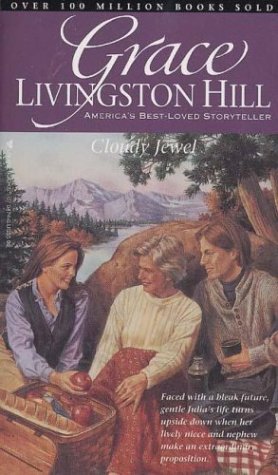
 I never heard my mother use the phrase “comfort read,” but I think the books of Grace Livingston Hill served that purpose for her. Hill wrote more than a hundred books, and my mother must have owned most of them. Cloudy Jewel (1920), Hills 28th book, was Mother’s favorite and one she reread countless times. It was the last book she read. Hill’s simplistic tales held little appeal for my sister and me by the time of my mother’s death, and we boxed up most of those well-worn copies and gave them to an aunt who shared Mother’s love of Hill. But I kept Cloudy Jewel along with other of her favorites such as The Enchanted Barn (1917), Brentwood (1937), Spice Box (1943), and The Obsession of Victoria Gracen (1915). Rereading them for the first time in many years, I can understand the appeal of Hill’s black-and-white world where faith was the sustaining force and moral ambiguities never intruded.


The daughter and the wife of clergymen, Grace Livingston Hill began writing novels because it was an acceptable way for a woman to earn money. She wrote her first novel, A Chautauqua Idyl, when she was only twenty-two, to earn money for a family vacation to Chautauqua, New York. The book sold for $.60. She continued to write after her marriage, but short stories, magazine articles, and Sunday School lessons took most of her writing time. A dozen years after her first novel was published, Hill was left a widow with two young daughters, and she turned again to writing novels to support her family. Her earliest novels targeted those who shared her Christian faith, but by 1904, she was interested in appealing to non-believers as well. Combining a love story with the gospel message, Hill penned dozens of books in which one character’s example of a life lived in intimate relationship with God and directed by Christian principles led others to a conversion experience. 


Hill often followed the pattern established by Augusta Jane Evans Wilson whose St. Elmo (1866) with its beautiful Christian heroine and cynical, worldly hero was one of the biggest selling novels of the 19th century (a million copies in its first four months of publication). Typical of Hill’s books in this pattern is The Enchanted Barn (1917), in which Shirley Hollister, the oldest daughter and main support of her widowed mother and four younger siblings, finds a refuge for her evicted family in an old stone barn, foils a kidnap plot and saves papers vital to the interest of her boss and the nation, and wins the affections of wealthy businessman Sydney Graham while impressing all—even one of her kidnappers—with the vibrancy and power of her faith. The Best Man (1908), which reverses the pattern, combines industrial espionage, mistaken identity, and romance. It was twice made into a movie, first in 1919 and again in 1925, under the title Marriage in Transit, with Carole Lombard playing the heroine.


In other books, life circumstances force a character whose Christianity is more nominal than real into a deeper faith relationship. Such is the case in Brentwood, in which the heroine discovers her birth parents and a siblings she never knew she had and is influenced by her young brother’s devoutness; in The Obsession of Victoria Gracen, in which the aristocratic Miss Gracen discovers a more vital personal faith through her concern about her adolescent nephew and his friends, the bad boys of the town; and in Cloudy Jewel, in which the title character Julia Cloud quietly witnesses to her niece and nephew, college students who are tempted by a party-hearty lifestyle. Hill’s most widely read book was The Witness (1917), in which Paul Courtland, a college student whose faith has been displaced by the rationalism of his classmates and professors, is inspired to know better the Christ of Stephen Marshall, a classmate who dies bravely as the result of a college prank gone awry. Contrasted to the saintly Stephen is Gila Dare, a seductive young woman who represents the dangers of worldly allure: 


"Had she not tossed so many a hapless soul that had come like a moth to singe his wings in her candle-flame, then laughed at him gaily as he lay writhing in his pain; and toss after him, torn and trampled, his own ideals of womanhood, too; so that all other women might henceforth be blighted in his eyes."


Despite such overblown language, Hill’s popularity has been consistent. She is recognized as the mother of inspirational romance. Some have compared her role in that subgenre to Georgette Heyer’s in Regency romance. Not only have many of Hill’s books remained in print, but also, in recent years, with the increase in popularity of inspirational romance, she has gained new readers. Barbour began releasing one Hill title a month of new trade paperback editions in January 2012, and Facebook and Yahoo groups maintain ongoing, active discussions of Hill’s books. It is not unusual to find readers commenting that Hill’s books seem “dated” or “cheesy” in one sentence and acknowledging in the next that her focus on new or renewed faith exercises an appeal strong enough to overcome the flaws. More than 84,000,000 copies of her books have been sold.


Do you read inspirational romance? Have you ever read a Grace Livingston Hill book?


Saturday, February 23, 2013

My Mother's Books, Part 3: Elizabeth Cadell


In considering words to describe the books of Elizabeth Cadell (1903-1989), I realized that those early Cadells were more influential than I realized. Cadell’s books are heartwarming tales involving a community of memorable relationships. The focus is on the relationships among the characters, relationships that generally include but that are not limited to a romance. Plots may involve a mystery, but they are not high action. Low key humor rooted in character is also a staple. In other words, the world I discovered in the books of Elizabeth Cadell has much in common with the worlds I find today in books by writers such as Debbie Macomber and Nancy Atherton. These are the books I reach for when I have those long-faced days when I am prone to quote Wordsworth (“The world is too much with us.”) and heave deep sighs.

Elizabeth Cadell was born in 1903 in Calcutta, India. Orphaned at a young age, she was educated in England but returned to India after her marriage. She didn’t begin writing until she returned to England after she was widowed when, like many women authors, she turned to writing as a means of supporting herself and her two children. My Dear Aunt Flora, one of the few Cadells I’ve never read, was published in 1946. Over the next forty-one years, Cadell published another fifty-one books, including two Harlequin romances: Bridal Array (#448) and Cuckoo in Spring (#473), both published as Harlequins in 1959.


Unlike others of my mother’s favorite authors, whose books were set only in England (Stevenson) or the United States (Baldwin, Hill, and Loring), Cadell quite often set her books wholly or partially in other places: Spain (Around the Rugged Rock, 1954), France (I Love a Lass, 1956—also published as Bridal Array, 1959), the Canary Islands (Canary Yellow, 1965), India (A Lion in the Way, 1982), and most frequently, Portugal, where Cadell moved in 1960 (Come Be My Guest, 1964; The Fox from His Lair, 1965; The Golden Collar, 1969, among others). But whatever the setting, her characters were always interesting, likeable, and individualistic.


Her heroines are usually intelligent, practical, and independent. Lucille Abbey, heroine of The Corner Shop (1966), is typical:

“She was aware that she was slim, blonde, and beautiful-but her looks, though they might be alluring, were also misleading and raised hopes which she was constantly constrained to crush. She had a clear brain, sound common sense and a capacity for hard work; why these sober attributes had been encased in so fancy a package she had never been able to understand; she knew only that she looked far warmer than she felt.”

Her heroes may be businessmen, naval officers, or realtors, but they are unprepared for love’s leveling blow. Henry Downing, descendant of the village founders in Any Two Can Play (1981), can serve as a representative of a group that would be labeled beta heroes by today’s readers:

“Silence fell--easy and companionable. He watched the soft light on her face, the gleam of her hair. Shadows enclosed them. . . . With feelings that were a mixture of surprise, apprehension, and exaltation, he acknowledged to himself that he was in love. Seated beside her in the glow of the candles, he ceased to question or resist. He loved her—deeply.”


Cadell also filled her books with old ladies and children. The old ladies, often aunts of the protagonists, may be fierce or retiring, and they are often eccentric. The children may be spoiled and obnoxious or mature and endearing. But regardless of disposition, they have a genuineness that renders them eminently believable. As Susan Branch noted in Twentieth-Century Romance and Historical Writers Cadell’s treatment of the old and the young was “sympathetic but not sentimental."


My favorite Cadell books are those in the Waynes of Wound Mount trilogy: The Lark Shall Sing (1955), The Blue Sky of Spring (1956), and Six Impossible Things (1961). The six orphaned Wayne siblings are introduced in the first book. Lucille, the oldest, thinks that her younger brothers and sisters are suitably settled, and since she is about to be married to a man who offers her security if little excitement, she makes the decision that the family home should be sold. The Waynes’ inheritance does not include the funds to maintain their old home, and Lucille, a sensible, take-charge sort, feels selling is their only option. Her siblings do not agree. 

The romance plot which has Lucille rejecting her stodgy suitor for one who increases her heart and respiration rates takes a back seat to the efforts of the younger siblings to preserve their home. Nicholas, newly returned to civilian life, buys a motorcycle to get him home, Roselle leaves her London job, Dominic and Simon run away from the aunt who has been caring for them, and Julia goes AWOL from her boarding school. Each one has his/her personal reasons for fighting to preserve their home, and with the help of a few fortuitous additions to their group, they are able to do so. The other books continue the adventures of the Waynes and other members of the Greenhurst community. I particularly love Six Impossible Things in which Julia grows up and gets her HEA.

Cadell’s popularity in England and the United States continued for decades. Mass market paperbacks were available, and libraries offered most of her titles. In the 21st century, her popularity has declined. Her books are out of print, and copies of hard-to-find titles are selling for more than $400, although bargains can be found. I added half a dozen titles to my keeper shelves recently when my local library placed them among the discards they sell for $1.00. Sadly, their placement there suggests that they were not being borrowed often.

I think someone is missing a great opportunity to market Cadell’s books as ebooks. Although she is not an inspirational writer, I think her books would have strong appeal for many of the romance readers who keep Inspys selling in substantial numbers and for other romance readers who prefer their romances kisses only. As for me, I will continue to find solace in the books of Elizabeth Cadell when I need to retreat to a kinder, gentler world where humor is barbless and romance is gentle.


Ebooks are making it possible for readers to find many titles that were hard to find and often quite expensive if one didn’t spend hours haunting used bookstores. What out of print books would you like to see digitalized?


 Look for Part 4 in My Mother’s Books series on March 9. The subject will be Grace Livingston Hill.

Saturday, February 9, 2013

My Mother’s Books, Part 2--Faith Baldwin (1893-1978)

 Marriage-in-trouble, second chance at love, love triangles, big misunderstandings, and other tropes I regularly toss around in discussing romance novels today, I first learned about reading my mother’s books. I might have lacked the vocabulary to talk about these tropes then, but the stories that contained them were the topic of many conversations I had about books with my mother and my best friend. None of the writers we were reading handled these timeless themes better than Faith Baldwin.

Faith Baldwin was the Nora Roberts of her day. In 1936, at the height of her popularity, she had five novels serialized in magazines such as Cosmopolitan and Ladies Home Journal, published three novels that were serialized the previous year, and saw four of her books adapted as films, including Wife vs. Secretary starring Clark Gable, Jean Harlow, and Myrna Loy and Love Before Breakfast starring Carole Lombard, Preston Foster, and Cesar Romero. Adjusting for inflation, Baldwin’s 1936 salary would be more than $5 million today.


Although Baldwin never approached the number of novels Roberts has written (200 plus), she was amazingly prolific, writing more than 85 novels in a career that spanned fifty years. A New York Times critic in 1939 wrote admiringly of her “turning them [novels] out a mile a minute, all readable” and called Baldwin “tops in her field.” Her first book was Mavis of the Green Hill (1921), but she made her reputation writing for the popular women’s magazines of the day that produced romances as six-part serials for their large audience. She sold her first serial to Good Housekeeping in 1927, and as her popularity increased, she earned as much as $55,000 for a serialized novel. That figure translates to $725,728 in 2013 currency.

Baldwin had a knack for knowing what her audience wanted and giving it to them. Her heroines were often young, successful women who were forced to deal with conflicts between a new role (career woman) and a traditional one (homemaker). Even a skim of her titles shows how frequent this theme appeared in novels such as The Office Wife (1930), White Collar Girl (1933), and He Married a Doctor (1944). Since Baldwin was writing romance, it is no surprise that marriage always won the battle, and the HEA was arrived at with women’s traditional role supreme.

Skyscraper, first published in 1931—the year the Empire State Building opened—earned praise for offering readers “a new kind of heroine,” a woman who loved her job in the city and, unlike her predecessors, was forced to choose not between two suitors but between financial independence and true love. The heroine’s choice is a real one since company she works for enforces a policy of not employing married women. Her choice is further complicated by the time, 1930, when jobs were scarce, and by her predatory but charismatic, married (although separated from his wife) boss. The novel became a 1932 movie, Skyscraper Souls starring Maureen O’Sullivan as the heroine. In 2003, Feminist Press reissued the novel as part of its Femmes Fatales: Women Write Pulp series. Alicia Daly of Ms called Skyscraper "a captivating and quietly subversive novel, featuring a spunky young working woman struggling to make it on her own.” She added “Skyscraper declares that despite all challenges, women should insist on their right to have it all."

Working girl heroines or not, Baldwin’s fictional world was largely one of fashionable clothing, private railway cars, and more than merely comfortable incomes. Such a world evidently held great appeal for Depression-era readers who found in Baldwin’s stories escape from the burdens of their own lives. Baldwin’s success was due to her ability to provide the escape while at the same time assuring her readers that the relationship her protagonists built were based on love and honesty, qualities available even to those denied ermine-collared bed jackets. Baldwin was not bothered by those labeled her fiction escapist. In fact, she took pride in offering her readers “some way to get out of themselves” and ruefully acknowledged that the decline in her sales numbers after World War II began could be attributed to the real world offering more excitement than her fictional one.


Sales may have been fewer, but Baldwin still had many tears of success ahead of her. Her books were still being adapted for film: Apartment for Peggy, filmed by Twentieth Century-Fox in 1948; Horsie, filmed by Robert Stillman Productions in 1951; and Queen for a Day, filmed by United Artists in 1951. In the earliest period of network television, she hosted a thirty-minute anthology for ABC, the Faith Baldwin Romance Theater. From 1958 to 1965, she wrote a monthly column for Woman’s Day called “The Open Door.” Even in its final years, the column drew 300 or more letters from readers each month and earned Baldwin as much as $850 per column (US$ 6,255 in 2013).

Baldwin continued writing well into her 80s. Hollywood no longer came calling, but a series Baldwin wrote in the 1970s found a readership. Building on one of her most popular books, Station Wagon Set (1939), Baldwin set another six books in Little Oxford: Any Village (1971), No Bed of Roses (1973), Time and the Hour (1974), New Girl in Town (1975), Thursday’s Child (1976), and Adam’s Eden (1977). By this time, a new generation of romance readers was immersed in Harlequin’s more sensual Harlequin Presents books in which Anne Mather shattered a taboo by including premarital sex and Kathleen Woodiwiss’s many imitators were producing historicals with an unprecedented sizzle factor. But other readers were still finding comfort in the final books of Faith Baldwin. I know because my mother was among those readers, and while I was reading Mather and Woodiwiss, I was also still reading my mother’s books.


Marriage-in-trouble books and second-chance-at-love stories are two of my favorite themes. When I look back, I can identify books from my mother’s bookshelves that introduced me to the tropes and fostered my love of them? What’s your favorite romance trope? Can you remember the first book that made you aware of how much you like the theme?


Friday, February 8, 2013

Reading My Mother's Books: An Introduction

Girl Reading by Charles Edward Perugini


You don’t hear much about them these days, but before the romance revolution that began with the publication of Kathleen Woodiwiss’s The Flame and the Flower in 1972, women were reading romance fiction. The first romances I read were my mother’s books. One muggy Georgia summer weekday, a short time before I turned ten, I was complaining because I had nothing to read and my dad couldn’t take me to the library until Saturday. Tired of my whining, my mother pointed me toward her books and said “Read.” I did. 

By Saturday, my reading interest had changed because I had discovered romance. I had read Pride and Prejudice, Jane Eyre, and a half dozen romances by Emilie Loring and Grace Livingston Hill. I was an avid reader from the time I was five, but it was that summer that my appetite for more and more to read became voracious. I carried a book with me everywhere, snatching a few moments to read lying on a towel at the swimming pool, following my mother down the aisles of the grocery store, even a few times stealing minutes during a Sunday morning sermon. (The last reached a forcible conclusion when my mother found me out.) Over the next couple of years, I discovered other treasures on my mother’s bookshelves—books by Faith Baldwin, Elizabeth Cadell, and D. E. Stevenson.

These were the books that started my life-long love affair with romance. I still have a double handful of my mother’s romances on my keeper shelves. I have since discovered that my experience was not unusual. Some studies suggest that most women who think of themselves as heavy readers began reading for pleasure between the ages of five and nine (63%), and a significant number (44%) read books that were recommended by their mothers or another close relative. (Many of my earlier favorite books—the Anne of Green Gables books and Louisa May Alcott’s books, for example—were also books my mother had loved and wanted me and my sister to read.)

It was many years later when I was in graduate school that I discovered just how popular the romance writers whose books my mother loved and shared with me had been. When I left my romance-reading closet where I had lurked throughout most of my academic career and joined the online romance fiction community, I was bothered by the fact that Loring and the others seemed largely forgotten. I toyed with the idea of writing a book about these gentle romance authors whose books tens of thousands of women readers devoured in an age when the only steam in romance fiction was that rising from the heroine’s tea cup. I even did some research and filled notebooks with copious notes, but other writing for profit and for pleasure always seemed to take precedence.

This week I did some cleaning and decluttering, and one of the decisions I had to make was whether to trash my notes on gentle romance along with some of the books by these authors. Somehow it seemed a betrayal of my mother and the gift she gave me that long ago summer to do so. That’s when a new idea was born: to use this blog for a series of posts paying tribute to the five romance writers I discovered on Mother’s bookshelves. So, beginning tomorrow and continuing through March, appropriately Women’s History Month, every other Saturday, I’ll be posting a tribute post to one of these writers. I’ll still do my regular Tuesday reviews and irregular bonus reviews on Thursdays, but the Saturday posts for this period will be focused on my mother’s books. I hope you will enjoy them.


How old were you when you discovered reading for pleasure? Who introduced you to romance fiction?