Showing posts with label Grace Livingston hill. Show all posts

Saturday, March 9, 2013

My Mother’s Books, Part 4: Grace Livingston Hill (1865-1947)


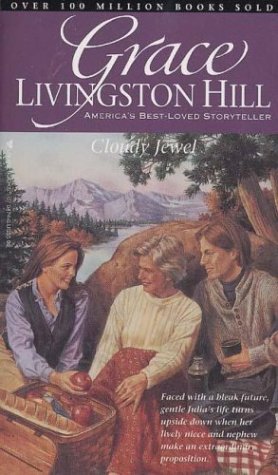
 I never heard my mother use the phrase “comfort read,” but I think the books of Grace Livingston Hill served that purpose for her. Hill wrote more than a hundred books, and my mother must have owned most of them. Cloudy Jewel (1920), Hills 28th book, was Mother’s favorite and one she reread countless times. It was the last book she read. Hill’s simplistic tales held little appeal for my sister and me by the time of my mother’s death, and we boxed up most of those well-worn copies and gave them to an aunt who shared Mother’s love of Hill. But I kept Cloudy Jewel along with other of her favorites such as The Enchanted Barn (1917), Brentwood (1937), Spice Box (1943), and The Obsession of Victoria Gracen (1915). Rereading them for the first time in many years, I can understand the appeal of Hill’s black-and-white world where faith was the sustaining force and moral ambiguities never intruded.


The daughter and the wife of clergymen, Grace Livingston Hill began writing novels because it was an acceptable way for a woman to earn money. She wrote her first novel, A Chautauqua Idyl, when she was only twenty-two, to earn money for a family vacation to Chautauqua, New York. The book sold for $.60. She continued to write after her marriage, but short stories, magazine articles, and Sunday School lessons took most of her writing time. A dozen years after her first novel was published, Hill was left a widow with two young daughters, and she turned again to writing novels to support her family. Her earliest novels targeted those who shared her Christian faith, but by 1904, she was interested in appealing to non-believers as well. Combining a love story with the gospel message, Hill penned dozens of books in which one character’s example of a life lived in intimate relationship with God and directed by Christian principles led others to a conversion experience. 


Hill often followed the pattern established by Augusta Jane Evans Wilson whose St. Elmo (1866) with its beautiful Christian heroine and cynical, worldly hero was one of the biggest selling novels of the 19th century (a million copies in its first four months of publication). Typical of Hill’s books in this pattern is The Enchanted Barn (1917), in which Shirley Hollister, the oldest daughter and main support of her widowed mother and four younger siblings, finds a refuge for her evicted family in an old stone barn, foils a kidnap plot and saves papers vital to the interest of her boss and the nation, and wins the affections of wealthy businessman Sydney Graham while impressing all—even one of her kidnappers—with the vibrancy and power of her faith. The Best Man (1908), which reverses the pattern, combines industrial espionage, mistaken identity, and romance. It was twice made into a movie, first in 1919 and again in 1925, under the title Marriage in Transit, with Carole Lombard playing the heroine.


In other books, life circumstances force a character whose Christianity is more nominal than real into a deeper faith relationship. Such is the case in Brentwood, in which the heroine discovers her birth parents and a siblings she never knew she had and is influenced by her young brother’s devoutness; in The Obsession of Victoria Gracen, in which the aristocratic Miss Gracen discovers a more vital personal faith through her concern about her adolescent nephew and his friends, the bad boys of the town; and in Cloudy Jewel, in which the title character Julia Cloud quietly witnesses to her niece and nephew, college students who are tempted by a party-hearty lifestyle. Hill’s most widely read book was The Witness (1917), in which Paul Courtland, a college student whose faith has been displaced by the rationalism of his classmates and professors, is inspired to know better the Christ of Stephen Marshall, a classmate who dies bravely as the result of a college prank gone awry. Contrasted to the saintly Stephen is Gila Dare, a seductive young woman who represents the dangers of worldly allure: 


"Had she not tossed so many a hapless soul that had come like a moth to singe his wings in her candle-flame, then laughed at him gaily as he lay writhing in his pain; and toss after him, torn and trampled, his own ideals of womanhood, too; so that all other women might henceforth be blighted in his eyes."


Despite such overblown language, Hill’s popularity has been consistent. She is recognized as the mother of inspirational romance. Some have compared her role in that subgenre to Georgette Heyer’s in Regency romance. Not only have many of Hill’s books remained in print, but also, in recent years, with the increase in popularity of inspirational romance, she has gained new readers. Barbour began releasing one Hill title a month of new trade paperback editions in January 2012, and Facebook and Yahoo groups maintain ongoing, active discussions of Hill’s books. It is not unusual to find readers commenting that Hill’s books seem “dated” or “cheesy” in one sentence and acknowledging in the next that her focus on new or renewed faith exercises an appeal strong enough to overcome the flaws. More than 84,000,000 copies of her books have been sold.


Do you read inspirational romance? Have you ever read a Grace Livingston Hill book?


Friday, February 8, 2013

Reading My Mother's Books: An Introduction

Girl Reading by Charles Edward Perugini


You don’t hear much about them these days, but before the romance revolution that began with the publication of Kathleen Woodiwiss’s The Flame and the Flower in 1972, women were reading romance fiction. The first romances I read were my mother’s books. One muggy Georgia summer weekday, a short time before I turned ten, I was complaining because I had nothing to read and my dad couldn’t take me to the library until Saturday. Tired of my whining, my mother pointed me toward her books and said “Read.” I did. 

By Saturday, my reading interest had changed because I had discovered romance. I had read Pride and Prejudice, Jane Eyre, and a half dozen romances by Emilie Loring and Grace Livingston Hill. I was an avid reader from the time I was five, but it was that summer that my appetite for more and more to read became voracious. I carried a book with me everywhere, snatching a few moments to read lying on a towel at the swimming pool, following my mother down the aisles of the grocery store, even a few times stealing minutes during a Sunday morning sermon. (The last reached a forcible conclusion when my mother found me out.) Over the next couple of years, I discovered other treasures on my mother’s bookshelves—books by Faith Baldwin, Elizabeth Cadell, and D. E. Stevenson.

These were the books that started my life-long love affair with romance. I still have a double handful of my mother’s romances on my keeper shelves. I have since discovered that my experience was not unusual. Some studies suggest that most women who think of themselves as heavy readers began reading for pleasure between the ages of five and nine (63%), and a significant number (44%) read books that were recommended by their mothers or another close relative. (Many of my earlier favorite books—the Anne of Green Gables books and Louisa May Alcott’s books, for example—were also books my mother had loved and wanted me and my sister to read.)

It was many years later when I was in graduate school that I discovered just how popular the romance writers whose books my mother loved and shared with me had been. When I left my romance-reading closet where I had lurked throughout most of my academic career and joined the online romance fiction community, I was bothered by the fact that Loring and the others seemed largely forgotten. I toyed with the idea of writing a book about these gentle romance authors whose books tens of thousands of women readers devoured in an age when the only steam in romance fiction was that rising from the heroine’s tea cup. I even did some research and filled notebooks with copious notes, but other writing for profit and for pleasure always seemed to take precedence.

This week I did some cleaning and decluttering, and one of the decisions I had to make was whether to trash my notes on gentle romance along with some of the books by these authors. Somehow it seemed a betrayal of my mother and the gift she gave me that long ago summer to do so. That’s when a new idea was born: to use this blog for a series of posts paying tribute to the five romance writers I discovered on Mother’s bookshelves. So, beginning tomorrow and continuing through March, appropriately Women’s History Month, every other Saturday, I’ll be posting a tribute post to one of these writers. I’ll still do my regular Tuesday reviews and irregular bonus reviews on Thursdays, but the Saturday posts for this period will be focused on my mother’s books. I hope you will enjoy them.


How old were you when you discovered reading for pleasure? Who introduced you to romance fiction?